
Piptospatha repens
Piptospatha repens
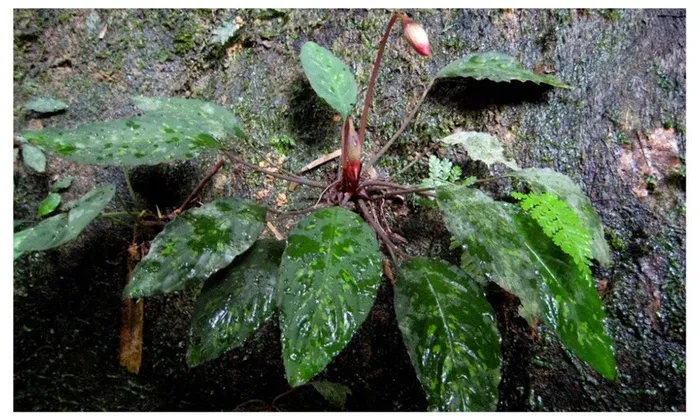
Description
Growing requirements
Piptospatha repens is a distinct member of the Araceae family, native to the tropical rainforests of Borneo. It is recognized as a classic rheophyte, meaning it has adapted to live on rocks and hard substrates in fast-flowing streams and rivers.
Cultivation requires conditions that closely mimic its natural habitat. The water temperature should ideally range between 22 and 26 degrees Celsius. Stable water chemistry, with low to moderate hardness, is essential for maintaining the health and vivid green coloration of the foliage.
Regarding soil and substrate, this plant does not thrive in standard mud-based soils. It prefers inert, porous substrates like volcanic rock, driftwood, or specialized clay-based aquarium media that allows for high oxygen exchange around the rhizome.
Lighting requirements are moderate. The species benefits from diffused, consistent lighting that allows for steady photosynthesis without stimulating excessive algal growth. High-intensity lighting can cause the leaves to become stunted or overgrown with biofilm.
Good agricultural practice for Piptospatha repens involves regular, small-dose fertilization and moderate water current. The plant performs best when the rhizome is exposed rather than buried, as deep burial often leads to decay of the primary stem system.
Main diseases and pests
The most prevalent threat to Piptospatha repens is the colonization of leaf surfaces by various types of nuisance algae. Since the plant grows slowly, it cannot compete with fast-growing algae, leading to leaf suffocation and premature decline.
Rhizome rot is a frequent issue caused by poor water circulation or substrate compaction. If the roots are trapped in anaerobic conditions, the plant will quickly display signs of decay, starting from the base of the stem.
Nutrient deficiencies, specifically in trace elements like iron and manganese, cause leaf yellowing (chlorosis). If untreated, this weakening of the plant's immune system makes it susceptible to opportunistic fungal attacks on the leaf margins.
In humid greenhouse or paludarium environments, spider mites can be a significant pest. These pests cause microscopic lesions on the leaves, which can later evolve into larger holes or necrotic spots if humidity levels are not properly maintained.
Chemical stressors, such as overdosing with copper-based algaecides, pose a severe risk to this species. Being a sensitive Araceous plant, it reacts negatively to high concentrations of heavy metals, which often result in terminal damage to the root system.