
Greater burnet-saxifrage
Pimpinella major (L.) Huds.
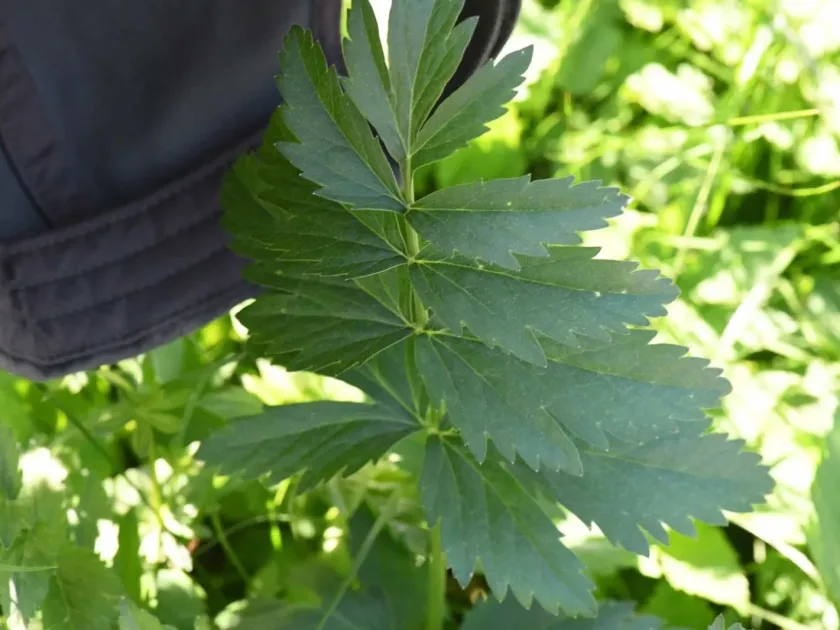
Description
Sowing dates
Greater burnet-saxifrage (Pimpinella major) is a perennial herbaceous plant belonging to the Apiaceae family. It is valued for its aromatic properties and its historical use in traditional herbal medicine.
Seeds are typically sown in late autumn or early spring. Stratification is highly recommended to break seed dormancy and ensure a high germination rate for the small, hard seeds.
The seeds should be sown at a shallow depth of approximately 1.5 centimeters in well-prepared, fine-textured soil. Adequate surface moisture must be maintained to support initial seedling emergence.
For commercial cultivation, row spacing of about 40–50 centimeters is advised to facilitate weeding and provide sufficient airflow, which helps prevent fungal issues in the dense foliage.
Growth during the first year is primarily vegetative, focusing on root development and rosette formation. Flower stalks typically emerge only in the second year of growth.
Growing requirements
The plant thrives in fertile, well-drained loamy or sandy soils. It is sensitive to waterlogging, so choosing a site with good drainage is essential to protect the root system from decay.
Greater burnet-saxifrage prefers sunny to semi-shaded environments. While it can tolerate partial shade, full sun exposure is necessary for maximizing the content of volatile oils in the plant tissues.
It is a hardy species capable of surviving cold winters. However, consistent moisture is required during the peak of the growing season to ensure vigorous leaf and flower development.
Protection from strong winds is beneficial, especially for taller blooming plants. Stable environmental conditions help the plant maintain its chemical profile and structural integrity.
Regular maintenance including light fertilization and soil aeration contributes to sustainable yields. The plant is generally adaptable but performs best in neutral to slightly alkaline pH soils.
Yield
Harvesting for medicinal and culinary use focuses on the aerial parts of the plant. Timing the harvest during the full flowering stage is critical to capture the highest concentration of essential oils.
Productive stands can be maintained for several years, though yields may decline after four or five seasons, necessitating the establishment of new plots to ensure continuous production.
Yield depends heavily on the season's weather pattern. Dry, sunny springs followed by moderate summer rainfall are ideal for promoting both biomass accumulation and seed set.
Careful post-harvest handling is mandatory. The plant materials must be dried in cool, dark, and well-ventilated areas to prevent the degradation of heat-sensitive aromatic compounds.
Seed harvesting should occur when the seeds start to turn brown. Prompt collection is necessary to prevent premature dispersal, which can result in significant field losses.
Main diseases and pests
The main threats to crop health include powdery mildew and rust diseases, which thrive in humid, poorly ventilated conditions. Promoting airflow is a primary defense strategy.
Pests such as aphids and various bugs can target the plant's developing buds and foliage. Integrated pest management (IPM) should be applied to keep populations below economic thresholds.
Root rot is a significant risk, particularly in heavy or compacted soils. Implementing proper crop rotation prevents the buildup of soil-borne pathogens common to the Apiaceae family.
Weed competition can drastically reduce yield by starving the plant of nutrients and light. Manual or light mechanical weeding is recommended during the early stages of growth.
Preventative cultural practices, such as choosing healthy plant material and maintaining balanced soil fertility, are far more effective than chemical intervention for this long-lived perennial.