
Bristly oxtongue
Picris echioides L.
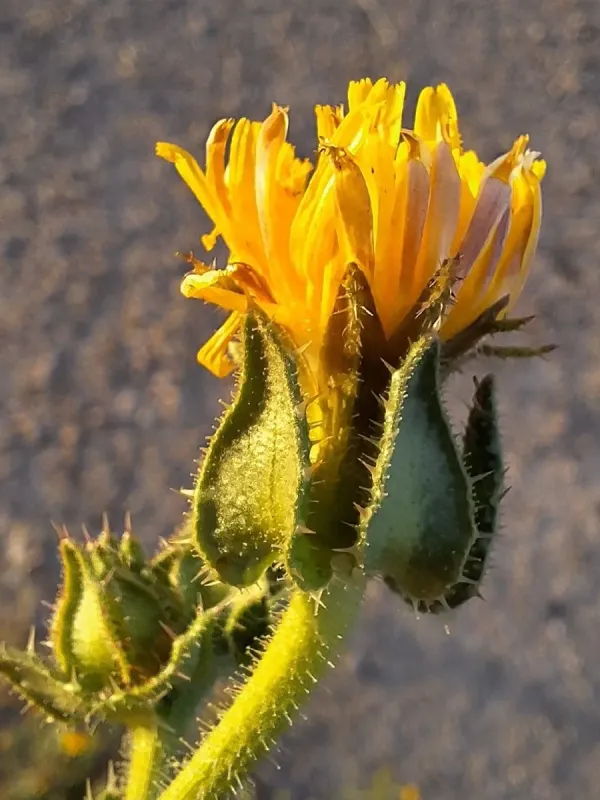
Description
Sowing dates
Bristly oxtongue belongs to the Asteraceae family and is commonly recognized as an annual or biennial plant. Seeds germinate primarily in early spring when soil temperatures reach favorable levels.
The germination process is highly dependent on light exposure and soil moisture content, which is typical for plants of this botanical family.
In agricultural settings, seeds are typically distributed by wind or mechanical equipment, leading to rapid spread across cultivated fields if not managed properly.
Successful establishment of the plant requires minimal disturbance of the soil surface during the germination phase to ensure optimal seedling development.
Farmers often utilize stale seedbed techniques to manage the emergence of this species in fields before sowing primary crops.
Growing requirements
This species thrives in well-drained, fertile soils ranging from loams to heavy clays. It shows significant adaptability to different soil structures.
The plant is highly resilient to dry conditions and exhibits excellent tolerance to saline soils, often appearing in areas where other plants fail to establish.
Sunlight exposure is crucial for the development of its characteristic rosette of leaves, as it is an obligate photophilous species.
Climatic conditions should be temperate to warm; the plant is known for its ability to withstand high heat indices during the peak growing season.
Proper soil aeration is recommended for optimal root development, as the plant possesses a deep taproot that penetrates compacted soil layers.
Yield
While not traditionally cultivated as a food crop, the plant produces a significant amount of biomass which can contribute to soil organic matter.
The seed output per plant is substantial, often numbering in the thousands, which makes it a highly prolific species in agricultural landscapes.
Potential for utilization exists in restorative ecology, where the biomass can be harvested for compost production or soil conditioning purposes.
Yield management in agriculture focuses on controlling its growth to prevent nutrient competition with primary cash crops in fields.
Strategic harvesting of the vegetative mass prior to flowering is the most effective method for managing its population density.
Main diseases and pests
The plant is susceptible to fungal infections such as powdery mildew, which can spread to neighboring crops under humid conditions.
Pests including aphids are frequently observed on the leaves, utilizing the plant as a primary host throughout the early summer months.
Root rot pathogens may affect the plant during prolonged wet weather, leading to the rapid decay of the taproot and premature plant death.
Integrated pest management strategies are recommended, focusing on crop rotation and manual removal to minimize chemical inputs.
Monitoring the population during the early vegetative stage is essential to prevent significant infestations of secondary pests on the farm.
Harvesting
When intended for biomass utilization, harvesting should be performed before the onset of flowering to prevent seed dispersal across the area.
The use of rotary mowers is the standard method for large-scale removal of the vegetative cover in field management practices.
Post-harvest handling requires careful drying of the material to ensure that any potential pathogens are neutralized through dehydration.
Equipment cleaning after operations in infested fields is critical to prevent the transfer of seeds to other parts of the agricultural property.
Following the harvest, deep plowing can be employed to bury remaining residues and suppress regrowth from the remaining root systems.