
Morinda spruce
Picea smithiana (Wall.) Boiss.
Description
Growing requirements
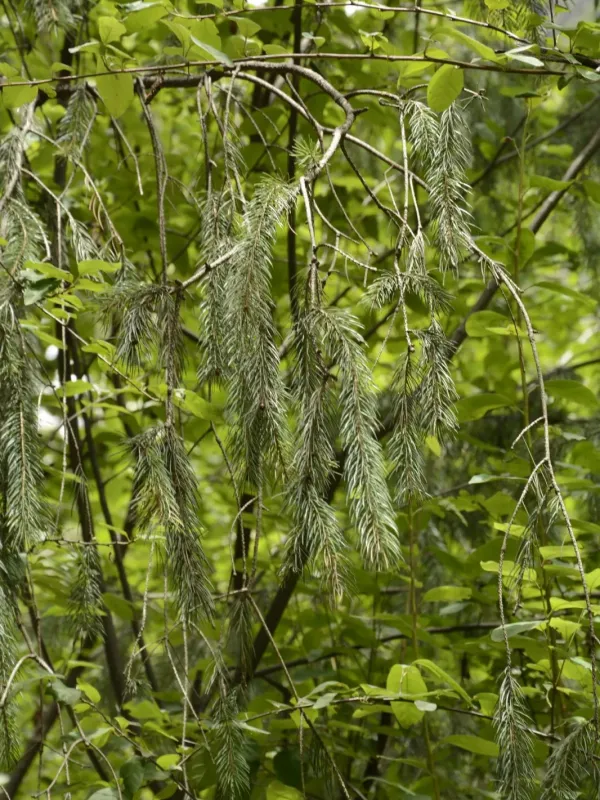
The Morinda spruce (Picea smithiana) is a member of the Pinaceae family, native to the western Himalayas. It is highly valued for its distinct pendulous branches and long, drooping needles, which give it a unique aesthetic appeal.
The tree thrives in cool, humid climates with high annual precipitation. It is particularly sensitive to extreme heat and prolonged dry periods, making careful irrigation management essential in non-native environments.
Ideally, this species requires deep, fertile, and well-drained soils. Waterlogged conditions must be strictly avoided, as the root system is susceptible to decay if aeration is insufficient for extended periods.
While the tree is relatively hardy, it prefers sheltered locations protected from harsh, desiccating winds. It is most suitable for cool-temperate regions where the summers are not excessively hot or arid.
Regular maintenance involves mulch application to retain soil moisture and moderate fertilization specifically formulated for conifers. Ensuring enough space for mature growth is critical for maintaining its characteristic weeping form.
Main diseases and pests
Common pathological threats include fungal infections such as needle cast diseases (Lophodermium spp.) and various types of rust. These infections are more prevalent in humid environments with poor air circulation.
Insect pests, specifically adelgids and spruce spider mites, are frequent issues. These pests suck nutrients from the needles and shoots, causing discoloration, stunting, or premature needle drop if left unchecked.
Management of these threats involves a combination of cultural and chemical strategies. Promoting airflow through proper spacing is the most effective preventative measure against fungal outbreaks.
Chemical control with systemic insecticides is necessary when mite or adelgid populations exceed threshold levels. It is important to rotate products to prevent the development of pest resistance to active ingredients.
Routine monitoring of the tree canopy for signs of infestation is vital. Removing dead or symptomatic branches helps limit the spread of pathogens throughout the specimen and nearby plants.