
Sitka spruce
Picea sitchensis (Bong.) Carrière
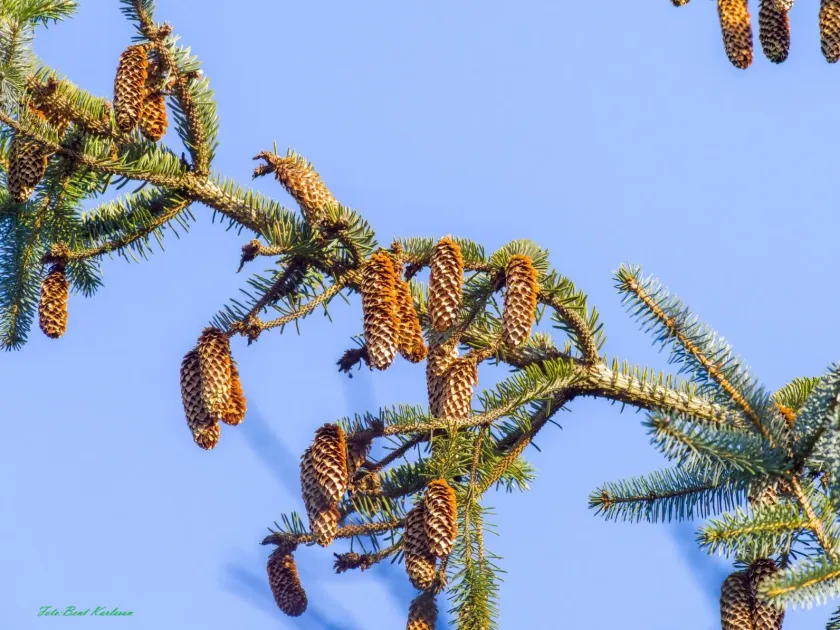
Description
Sowing dates
Sowing of Sitka spruce seeds typically takes place in nurseries during early spring once the soil temperatures have risen sufficiently to trigger germination. Proper seed pre-treatment, including cold stratification, is vital for achieving high seedling emergence rates.
Containerized seedling production is the modern standard, allowing for precise control over the initial growth environment. Using specialized growing media ensures that the root system develops uniformly, which is crucial for subsequent field performance.
The seeds are sown at a shallow depth, usually not exceeding 1 centimeter, and require careful monitoring of humidity levels. Protecting the seedbeds from birds and rodents is a necessary part of the nursery management process.
Seedlings are generally kept in the nursery for two to three years before being transplanted into forest sites. This duration allows them to reach a robust size and develop a strong root system, which improves survival rates after planting.
Site preparation is essential prior to outplanting, involving vegetation management and soil loosening to reduce competition from grasses and invasive weeds during the crucial establishment phase.
Growing requirements
Sitka spruce (family Pinaceae) is a moisture-loving species that thrives in maritime climates with cool summers and mild winters. It requires consistent high humidity to reach its full growth potential.
The tree is sensitive to atmospheric drought and dry winds, which can lead to desiccation and reduced growth. Ideal growing sites are located in regions where rainfall is well-distributed throughout the entire vegetative season.
While Sitka spruce is not overly demanding regarding soil type, it prefers deep, fertile, and well-drained loamy soils. It avoids sites with waterlogged conditions, as good aeration is essential for root health.
It is a moderately shade-tolerant species during its juvenile stage, allowing it to regenerate under a canopy, but it requires increasing levels of sunlight as it matures to maintain its rapid growth rate.
Although it is relatively hardy, the species can be susceptible to late spring frosts that damage tender new shoots, potentially leading to growth deformations if the frosts are frequent or severe.
Yield
Sitka spruce is widely recognized as one of the fastest-growing conifer species in the world, making it highly valuable for commercial timber production. In optimal conditions, it can reach impressive heights in a relatively short time.
The productivity of Sitka spruce plantations is significantly influenced by silvicultural interventions, such as thinning operations. These practices ensure that the best trees have enough space and light to maximize their wood increment.
The wood produced is light, strong, and highly versatile, finding applications in construction, paper pulp production, and the manufacture of specialized soundboards for high-quality musical instruments.
Harvesting cycles are generally shorter compared to other conifers, allowing for higher turnover rates in plantation forestry. This efficiency contributes to the economic viability of growing this species on an industrial scale.
Strategic management of plantation density is the key to balancing the high volume of wood production with the individual quality of the stems, ensuring a mix of timber suitable for various market demands.
Main diseases and pests
The most significant pest for Sitka spruce is the spruce aphid, which causes needle drop and can significantly weaken young stands during warm, mild winters. Integrated pest management strategies are often required.
Fungal pathogens such as needle cast diseases thrive in humid conditions and can reduce photosynthetic capacity. Maintaining proper tree spacing is a standard practice to improve air circulation and mitigate this risk.
Root rot, particularly when caused by Armillaria species, poses a persistent threat to forest health. It often spreads through root-to-root contact, making early detection and sanitation of infected areas critical.
Windthrow is a major environmental threat due to the tree's shallow root system, especially on unstable or wet soils. High-intensity wind events can cause significant damage to mature, non-thinned stands.
- Spruce aphid infestations during mild winters.
- Needle cast caused by fungal agents.
- Root decay leading to structural instability.
- Bark damage and browsing by deer and other wildlife.