
Tigertail spruce
Picea polita (Siebold & Zucc.) Carrière
Description
Growing requirements
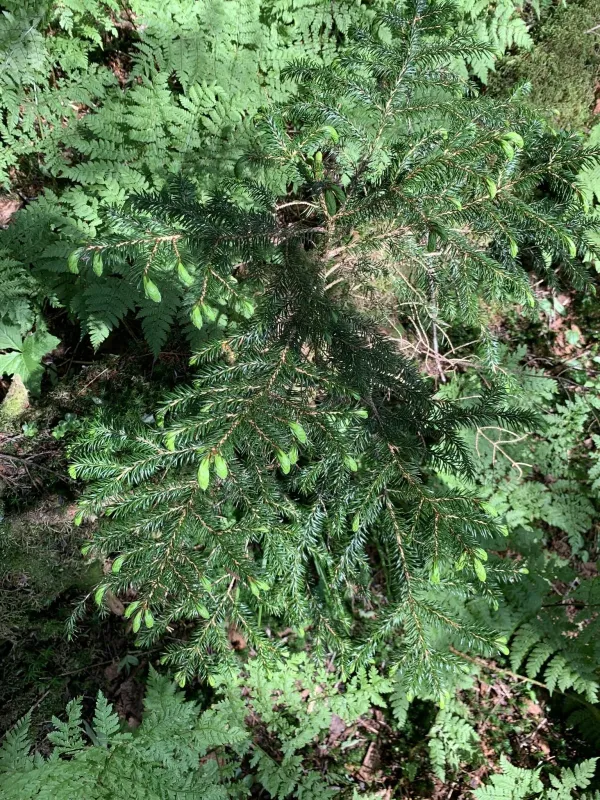
The Tigertail spruce (Picea polita), a member of the Pinaceae family, is a distinct conifer species native to the mountain regions of Japan. It is widely recognized for its aesthetic appeal and structural uniqueness in temperate landscapes.
The tree thrives in cool, humid climates and prefers deep, well-draining soils with an acidic to neutral pH level. It performs best in locations where it can receive consistent moisture without enduring waterlogged conditions.
Botanically, Picea polita is identified by its extremely sharp, rigid, and glossy green needles, which resemble a tiger's tail, hence the common name. The tree develops a broad, conical growth habit that remains stable throughout its maturation.
Cultivation requires exposure to full sun or light shade to maintain optimal density of the canopy. Young saplings require regular irrigation to establish a strong root system, while established specimens show moderate drought tolerance.
In terms of хозяйство (land use), the species is primarily valued as an ornamental specimen in arboretums and large gardens. Its wood is also utilized in traditional woodworking due to its structural strength and straight grain.
Main diseases and pests
Like many Picea species, the Tigertail spruce is susceptible to fungal infections such as needle cast and rust. These diseases typically manifest during periods of high humidity and stagnant air circulation.
Insect pests, including aphids and spruce mites, can infest the foliage, particularly in nurseries or high-density plantations. These pests deplete plant sap and lead to yellowing or premature needle drop if untreated.
Integrated pest management, including pruning for airflow and regular monitoring, is essential for maintaining plant vitality. Using fungicides during the early spring helps prevent the development of primary fungal spores.
Severe infestations require the application of selective insecticides or acaricides. It is critical to follow label instructions carefully to avoid harming beneficial insects present in the spruce ecosystem.
Maintaining the overall vigor of the tree through balanced fertilization and correct watering practices is the best line of defense against both pests and pathogens. Stress-free trees are far less likely to succumb to infections.