
Black spruce
Picea mariana (Mill.) Britton et al.
Description
Growing requirements
Black spruce is an evergreen coniferous tree belonging to the Pinaceae family. It is widely recognized for its ability to thrive in the harsh, acidic, and nutrient-poor environments of the North American boreal forest, frequently dominating peatlands and wetlands.
Native to Canada and the northern United States, the species is highly adaptable to a wide range of climatic conditions. It is specifically noted for its survival strategy in waterlogged soils where oxygen levels are low and other coniferous species would fail.
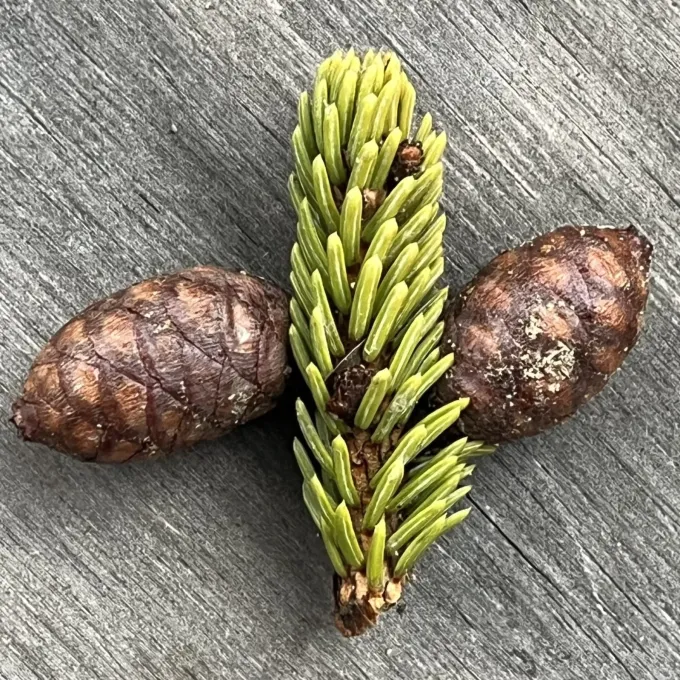
The tree exhibits slow growth and reaches moderate heights, typically featuring a narrow, spire-like crown. Its needles are short and dark blue-green, while the small, egg-shaped cones are known for their persistence, often remaining on the branches for several years.
For commercial cultivation, black spruce requires sites with adequate moisture. It performs best in soils that are acidic and cool. While it can withstand poor soil quality, its productivity is significantly higher in well-drained loamy soils under sufficient sunlight.
The timber of black spruce is highly valued in the pulp and paper industry due to its long fibers and consistent wood density. Management of this species focuses on sustainable harvesting cycles that allow for natural regeneration through its unique semi-serotinous cones.
Main diseases and pests
The eastern spruce budworm is the most significant pest affecting black spruce. Outbreaks can cause severe defoliation, leading to growth loss and tree mortality over large forest areas if not managed through integrated pest control programs.
Fungal diseases, particularly spruce needle rust and various types of needle cast, represent constant challenges. These pathogens thrive in humid conditions and can significantly impact the health of nursery seedlings if preventative measures are neglected.
Root rot caused by pathogenic fungi is another serious concern, especially in mature stands. These infections often go undetected until structural integrity is compromised, leading to increased vulnerability during wind events.
Climatic stress, such as prolonged droughts or unexpected frost events, weakens the host trees, making them more susceptible to bark beetle infestations. Maintaining stand vigor through thinning is a primary silvicultural technique to mitigate these threats.
Effective management also involves monitoring for secondary pests such as aphids and sawflies. Early detection and targeted intervention, including silvicultural and chemical controls, are essential to maintain the productivity of commercial black spruce plantations.