
Picconia excelsa
Picconia excelsa
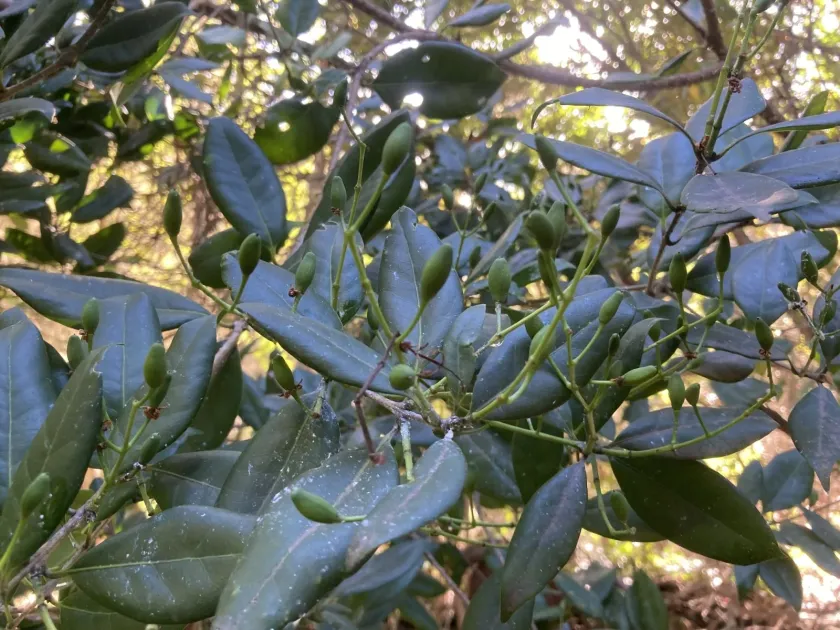
Description
Growing requirements
Picconia excelsa is an evergreen tree belonging to the Oleaceae family. It is endemic to the Macaronesian region, specifically found in the laurel forests of the Canary Islands and Madeira, where it serves as a prominent canopy species.
Botanically, the species is known for its leathery, glossy leaves and small, fragrant white flowers arranged in axillary inflorescences. The fruits are drupes that resemble small olives, turning dark purple or black upon maturation.
The tree thrives in mild, temperate to subtropical climates with stable humidity levels. It requires deep, well-drained soil rich in organic matter to prevent root suffocation, as it is highly sensitive to waterlogged environments.
Regarding agrotechnical management, Picconia excelsa requires exposure to sunlight, although young saplings should be protected from direct, scorching sun during the peak of summer. Sheltered locations are preferred to prevent wind damage to the branches.
In terms of usage, the plant is primarily valued for ornamental purposes in botanical gardens and public landscapes. Historically, its hard and dense timber was utilized for specialized joinery, highlighting its structural durability.
Main diseases and pests
Fungal pathogens represent the most significant threat to the health of the tree, particularly in high-humidity zones. Root rot is a common issue if soil aeration is not properly managed during the rainy season.
Pest populations, including scale insects and aphids, often target the tender shoots and leaves. These pests can severely weaken the plant if left untreated, leading to stunted growth and secondary infections.
Integrated pest management involves regular monitoring and the use of horticultural oils if infestation occurs. Removing infested plant parts immediately helps to contain the spread of insects throughout the canopy.
Nutrient management is essential for disease prevention. Providing adequate potassium and trace minerals ensures the plant maintains a robust cell structure, making it less susceptible to external environmental stressors.
Pruning is critical not only for aesthetics but for plant health as well. Thinning out the inner canopy allows for better light penetration and airflow, which discourages the growth of opportunistic fungal spores.