
Piaranthus cornutus
Piaranthus cornutus
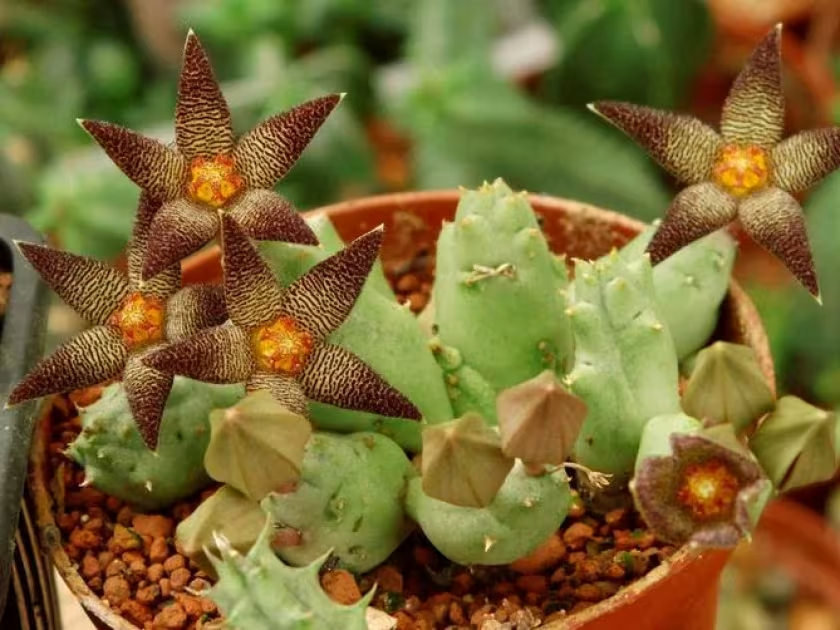
Description
Growing requirements
Piaranthus cornutus is a distinct succulent species belonging to the Apocynaceae family. Native to the arid regions of Southern Africa, this plant has evolved to store significant reserves of water within its succulent stems to survive long periods of drought.
The botanical structure of the plant consists of low-growing, clustered stems with small, tooth-like projections. Its growth habit is prostrate or spreading, making it a popular choice for rock gardens or specialized succulent collections in controlled environments.
Successful cultivation requires a highly porous soil medium, typically a mix of coarse sand, perlite, and a small amount of pumice. A well-draining substrate is mandatory to prevent root rot, as the plant cannot tolerate waterlogged conditions.
The species demands bright, filtered sunlight to maintain its structural integrity. While it thrives in warm climates, intense afternoon sun may cause the epidermis to redden or develop necrotic spots, necessitating the use of shade cloth in high-light intensity zones.
Temperature management is crucial: the plant prefers warm days with cooler nights. During winter dormancy, it should be kept in a dry, cool location with temperatures ranging between 10 to 12 degrees Celsius to mimic its natural dormancy cycle.
Main diseases and pests
Mealybugs are the most frequent pests, often clustering at the base of the stems or in the gaps between joints. Regular inspection and the application of systemic insecticides or isopropyl alcohol swabs are standard practices for control.
Fungal diseases caused by over-irrigation are a primary threat to the longevity of Piaranthus cornutus. Root rot manifests as darkened, soft tissue at the base of the plant, often leading to rapid systemic collapse if left untreated.
Aphids can occasionally target new growth during the active growing season. Their presence can be managed by using gentle horticultural soaps or botanical-based insecticidal sprays that are safe for use on succulent tissues.
Poor ventilation in greenhouse environments can promote the growth of surface molds and mildews. Ensuring adequate air circulation is a critical prophylactic measure to keep the stems free from surface pathogens.
Root-knot nematodes can cause stunted growth and nutrient deficiencies. To prevent these soil-borne threats, it is recommended to use sanitized potting media and avoid using reclaimed soil from outdoor gardens.