
Phyllodium longipes
Phyllodium longipes
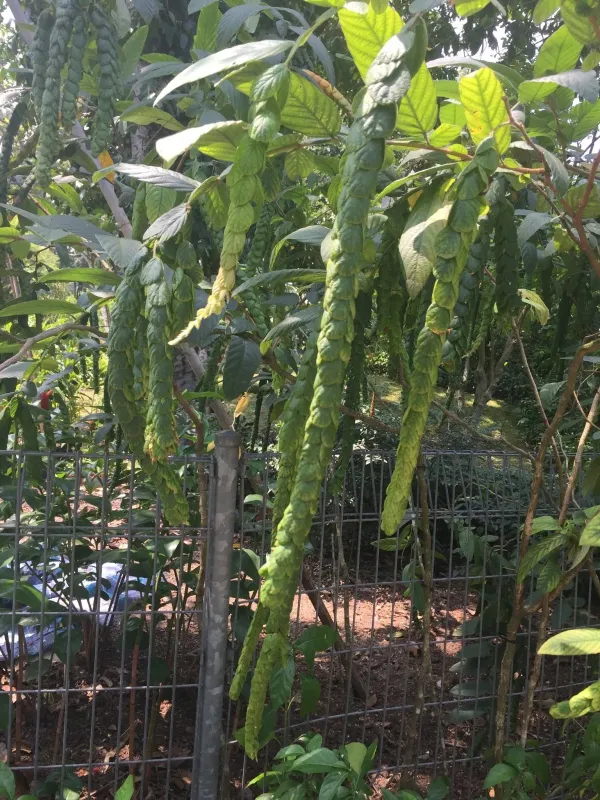
Description
Sowing dates
Phyllodium longipes is a perennial leguminous plant belonging to the Fabaceae family. In tropical agricultural practices, seeding is typically scheduled to coincide with the onset of the rainy season to ensure sufficient moisture for seed germination and initial establishment.
The seeds possess a hard coat, which often necessitates pre-sowing treatments such as scarification to improve germination rates. Ideal soil temperatures for sowing should be at least +20°C, promoting rapid metabolic activity within the developing seedlings.
Seeds should be planted at a shallow depth of 1 to 2 centimeters. Proper placement is crucial to prevent the exhaustion of the seedling's energy reserves, which can occur if seeds are buried too deeply in dense or heavy soil structures.
When cultivated as a cover crop, seeding rates must be adjusted to ensure full canopy closure. This competitive growth habit effectively suppresses weed proliferation, reducing the need for intensive manual or chemical weeding throughout the growing period.
Initial growth is notably slow, requiring farmers to pay close attention to weed control in the first few weeks after emergence. Providing a weed-free environment during this phase is critical to ensure successful stand establishment.
Growing requirements
This species thrives in well-drained loamy or sandy soils with a mildly acidic pH. It is highly sensitive to waterlogged conditions, making it unsuitable for areas with poor drainage or high risks of flooding, which can cause severe root health issues.
Phyllodium longipes is well-adapted to warm climates and requires stable, high temperatures for optimal vegetative development. While it exhibits some tolerance to short periods of drought, consistent moisture is necessary for maximizing biomass yields.
The plant performs well in open environments but can also tolerate partial shade. This characteristic makes it a suitable candidate for agroforestry systems, where it can grow in the interspaces between trees while contributing to overall land productivity.
As a legume, it forms a symbiotic relationship with nitrogen-fixing bacteria. This biological nitrogen fixation significantly enhances soil fertility, making it a valuable plant for restoring depleted lands or as part of a sustainable crop rotation plan.
Cultivation should be avoided on highly saline soils or areas with heavy metal contamination. Such conditions inhibit the function of nitrogen-fixing root nodules, which is the primary driver of the plant's nutritional and agricultural benefit.
Yield
Biomass production is contingent upon frequency of harvesting and the availability of essential nutrients. Under favorable conditions, the crop is capable of providing multiple cuttings within a single growing season, making it a reliable source of green fodder.
Economic utility ranges from green manure production to forage and hay harvesting. It is imperative to harvest the plant before stems become lignified; harvesting at the peak of the flowering stage ensures the highest protein content and digestibility for livestock.
Maximum nutrient density is reached during the active flowering phase. Harvesting at this stage optimizes the nutritional profile, though care must be taken to prevent late-stage harvesting, which results in significant drops in palatability and feed value.
When used as green manure, the biomass is incorporated into the soil during flowering. This practice improves soil structure and organic matter content, serving as a natural fertilizer that reduces reliance on synthetic nitrogen inputs for subsequent crops.
Seed yield varies significantly depending on the presence of local pollinators. Encouraging pollinator activity around the fields through the maintenance of surrounding natural habitats is essential for achieving consistent and high-quality seed harvests.
Main diseases and pests
Fungal diseases affecting the root system represent a major threat, particularly in poorly drained or overly damp soils. These pathogens can cause root rot, stunted growth, and a marked reduction in the plant's overall vigor and yield capacity.
Pests such as aphids and leaf-eating insects can cause significant damage to young stands. An integrated pest management approach, utilizing biological control agents and resistant cultivars, is recommended to mitigate these risks effectively.
Nematodes are particularly problematic when the crop is grown as a monoculture for extended periods. Implementing a diverse crop rotation cycle that includes non-leguminous plants is the most effective strategy for managing nematode populations.
Viral infections transmitted by insect vectors can lead to leaf deformation and stunted development. Constant field monitoring and the prompt removal of infected plants are necessary to prevent the spread of these diseases across the agricultural site.
Weed competition is most severe during the plant's slow-growing juvenile phase. If left uncontrolled, weeds can outcompete the young seedlings for light, water, and nutrients, potentially leading to crop failure and the need for expensive replanting.
Harvesting
Harvesting is usually conducted using mechanical mowing equipment. Setting the cutting blade to an appropriate height is essential to ensure that enough vegetative buds remain to facilitate rapid regrowth and recovery after the harvest operation.
For hay production, rapid drying is necessary to prevent spoilage, mold development, and nutrient leaching. Properly dried hay maintains its green coloration and nutritional value, making it suitable for long-term storage in agricultural facilities.
Seed collection is often performed using specialized harvesting equipment or manual labor, depending on the scale of production. Timing is critical, as pods should be harvested as soon as they reach maturity to minimize losses due to natural pod shattering.
Post-harvest processing involves cleaning and drying seeds to a moisture level suitable for storage. Keeping seeds in a cool, dry environment is essential to preserve viability and ensure a high germination rate for the following planting season.
After harvesting, the soil should be lightly tilled to promote aeration and stimulate the existing root systems. This post-harvest maintenance helps prepare the field for the next growth cycle or the introduction of a follow-up crop in the rotation.