
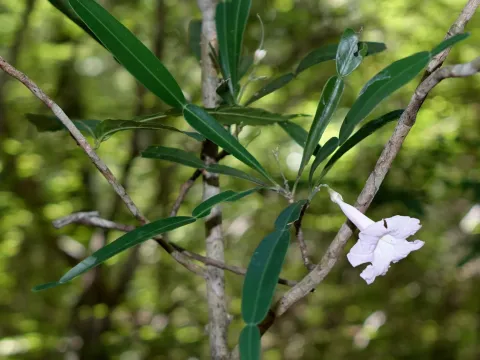
Phyllarthron
Phyllarthron DC.
Phyllarthron is a genus of evergreen trees and shrubs belonging to the Bignoniaceae family. These plants are scientifically recognized for their distinctive jointed foliage, which consists of flattened, leaf-like stem segments that serve as a unique botanical adaptation.
What the section contains

Phyllarthron
The native distribution of this genus is concentrated on Madagascar and nearby islands in the Indian Ocean. These regions provide a tropical environment with consistent heat and humidity, which constitutes the ideal climate for the plant's natural growth cycles.
Successful cultivation of Phyllarthron requires a well-draining, nutrient-rich potting medium, typically a mix of loam, sand, and organic matter. Proper aeration is crucial to prevent root zone suffocation and ensure the plant maintains a healthy metabolic rate.
The plant thrives in temperatures between 22°C and 28°C and requires a relatively high ambient humidity level. In temperate regions, it is cultivated exclusively in greenhouses or as an indoor ornamental plant, away from cold drafts and frost.
Agrotechnical management includes regular fertilization during the active growing season and a balanced irrigation schedule. Excessive irrigation must be avoided, as the species is highly susceptible to root damage in waterlogged soil conditions.
In closed environments like greenhouses, Phyllarthron is prone to infestations of spider mites and scale insects. These pests thrive in dry air conditions and can cause significant damage to the leaf segments if left untreated.
Root rot, often caused by overwatering or suboptimal drainage, is the primary threat to the plant's health. Such fungal pathogens can weaken the vascular system and lead to rapid decline in plant vitality.
Integrated pest management strategies are recommended, including regular monitoring of foliage, mechanical cleaning, and the timely application of specific miticides or contact insecticides.
Cultural control measures, such as maintaining appropriate spacing between plants to improve airflow and sterilization of pruning equipment, are essential for preventing the spread of secondary infections.
Avoiding sudden temperature fluctuations is vital for plant immunity. Stress-free conditions are the best defense against both common pests and environmental pathogens that target weakened specimens.