
Phyllarthron bojeranum
Phyllarthron bojeranum DC.
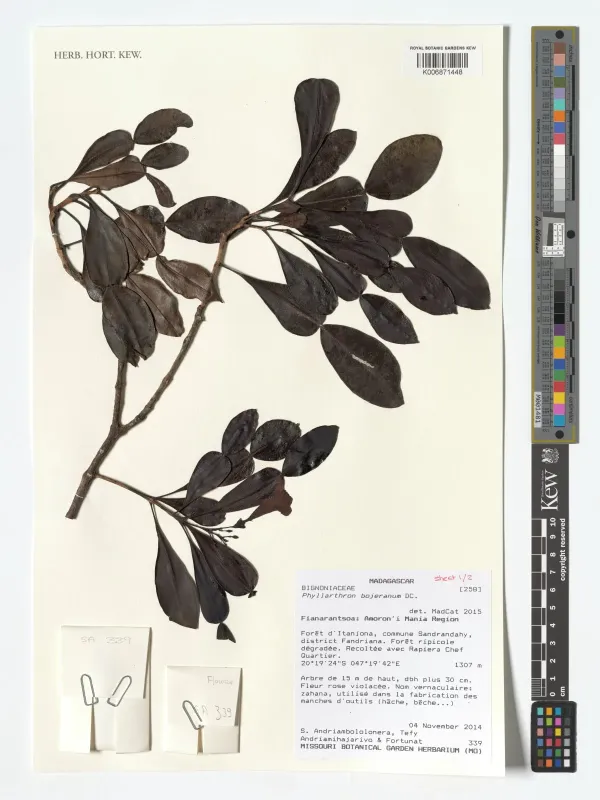
Description
Growing requirements
Phyllarthron bojeranum is a unique shrub belonging to the Bignoniaceae family, indigenous to the island of Madagascar. This woody plant thrives in tropical environments, characterized by consistent warmth and distinct humidity patterns, making it a specialized crop for controlled environments.
Cultivation requirements demand a porous, well-draining substrate rich in organic matter. Proper soil management is critical to prevent root suffocation, as this species is sensitive to waterlogged conditions which quickly inhibit its metabolic processes and overall growth vitality.
The plant requires high light intensity, ideally filtered or dappled sunlight, to maintain its structural integrity and encourage healthy foliage development. Temperature stability is paramount, with the plant favoring ranges between 22 and 28 degrees Celsius, avoiding any exposure to frost or prolonged chilling.
Its botanical signature lies in the complex, jointed leaflets that appear as stem-like segments. This morphological adaptation is a testament to its evolution within its native habitat, allowing the plant to navigate seasonal water variability and optimize its photosynthetic capacity under tropical canopies.
Horticulturally, Phyllarthron bojeranum serves as a premium specimen for botanical gardens and professional conservatory collections. Its role is primarily ornamental, appreciated by experts for its distinctive architectural form and its status as a rare representative of Madagascar's unique flora.
Main diseases and pests
Common threats to this species in greenhouse settings include sucking insects, particularly spider mites and mealybugs, which thrive in protected environments. Implementing integrated pest management strategies is essential to protect the delicate foliage from infestation damage.
Fungal pathogens represent the most significant risk when agricultural practices are neglected, specifically concerning irrigation timing. Maintaining an optimal balance between soil moisture and air circulation is the best preventive measure against the onset of root and stem rot diseases.