
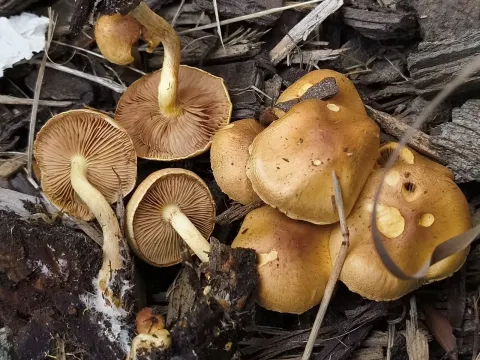
Pholiota
Pholiota
The cultivation of Pholiota begins with the preparation of high-quality spawn. In professional settings, grain-based spawn is preferred as it facilitates uniform colonization of the growing medium.
What the section contains


Pholiota
The choice of substrate is critical for this wood-rotting fungus. Hardwood sawdust, straw, or a mixture of agricultural by-products such as sunflower seed hulls are typically used to create a nutrient-dense foundation.
Before inoculation, the substrate must undergo pasteurization or sterilization to eliminate competing microorganisms, which is essential for ensuring a pure culture development.
Inoculation should be performed in a sterile environment to prevent contamination. The spawn is mixed thoroughly into the cooled substrate, followed by incubation in a dark room until fully colonized.
The incubation period usually lasts several weeks. Once the mycelium has fully permeated the block, it is ready for the transition to the fruiting room to initiate pinhead formation.
Pholiota mushrooms are lignicolous, meaning they require a substrate containing lignin and cellulose to thrive. Supplementing sawdust with nitrogen sources like wheat bran improves overall yield.
Maintaining a stable temperature is vital during both incubation and fruiting phases. While incubation requires warmer conditions, the fruiting phase requires a drop in temperature to 12-16 degrees Celsius to trigger development.
Humidity management is a cornerstone of success. A constant relative humidity level between 85 and 90 percent must be maintained in the fruiting chamber to prevent the mushrooms from drying out.
Light is an essential environmental stimulus for Pholiota. The mushrooms require diffuse light to grow correctly; otherwise, the fruiting bodies will become etiolated, pale, and distorted.
Air exchange must be efficient to prevent the accumulation of CO2. High carbon dioxide levels inhibit proper cap expansion and lead to poor quality, elongated stems, significantly reducing the market value of the crop.
The expected yield for Pholiota is generally around 15 to 25 percent of the wet substrate weight. This biological efficiency can vary based on the specific strain used and the environmental control precision.
The mushrooms develop in flushes. The first flush is typically the most productive, contributing to the bulk of the total harvest volume obtained from a single cultivation block.
Effective management includes allowing for a recovery period between flushes. This interval allows the mycelium to recover energy reserves necessary for subsequent growth cycles.
Under optimal conditions, growers can expect two to three successful flushes. Monitoring the health of the mycelium is essential to decide when a block has exhausted its nutrient potential.
Strain selection plays a major role in consistency. Using commercial-grade, high-vigor strains often leads to more uniform harvests compared to utilizing wild-collected cultures.
Contamination by mold species, particularly Trichoderma, is the primary threat to Pholiota beds. These aggressive fungi can rapidly overgrow the substrate, killing the mushroom mycelium.
Pests like fungus gnats (sciarids) represent a major challenge. Their larvae feed on the developing mycelium and stalks, causing structural damage and opening the way for bacterial rot.
Bacterial blotch, caused by Pseudomonas bacteria, is often a result of excess moisture on the surface of the caps combined with poor ventilation, which can render the crop unsellable.
Mites can also infest cultivation rooms, damaging primordia and spreading pathogens. Strict sanitary protocols, such as filtering air intakes, are the most effective way to keep these threats at bay.
Biological control methods are preferred over chemical pesticides. Maintaining impeccable hygiene and properly pasteurizing the substrate are the best preventive measures for sustainable production.
Pholiota should be harvested when the caps are well-formed but still partially curled, before the gills are fully exposed and the spores begin to drop extensively.
Harvesting involves cutting the stems close to the base or gently twisting the cluster. Care must be taken to remove any remnants of the stalks to prevent the development of localized rot.
Post-harvest handling is critical due to the delicate nature of the fruit bodies. Mushrooms should be cleaned, sorted, and packed into ventilated crates as soon as possible.
Storage should be in refrigerated units at temperatures between 2 and 4 degrees Celsius. The shelf life is relatively short, requiring a rapid supply chain to ensure quality for the consumer.
Grading is based on the size, cleanliness, and freshness of the cluster. High-quality produce should show no signs of bruising, discoloration, or infestation, meeting all safety standards for consumption.