
Pholiota nameko
Pholiota nameko (T. Ito) S. Ito et Imai
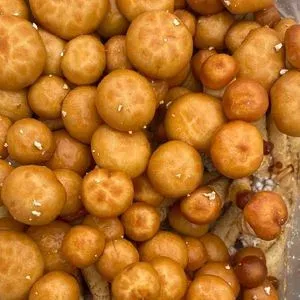
Description
Sowing dates
Pholiota nameko is a xylotrophic fungus belonging to the Strophariaceae family. In commercial cultivation, mycelium inoculation is carried out year-round under controlled microclimate conditions, making this mushroom a promising crop for commercial fungi production.
The cultivation technology is based on the use of a prepared substrate consisting of a mixture of hardwood sawdust, rice bran, and nitrogen-rich mineral additives.
Inoculation of the substrate occurs under sterile conditions following pasteurization or autoclaving, which prevents the development of competitive microorganisms during the initial colonization phase.
The mycelium incubation period lasts from 30 to 60 days, depending on temperature and nutrient composition, after which the blocks are transferred to a fruiting chamber.
To activate primordia formation, a reduction in temperature and an increase in air humidity are required, mimicking the natural seasonal changes found in the wild.
Growing requirements
Nameko prefers a humid and cool climate. The optimal temperature for vegetative mycelium growth is 22–25 °C, while fruiting bodies require lower temperatures, typically between 12–18 °C.
Air humidity in the fruiting chamber should be maintained between 85–95%. Excessively dry air leads to cracking of the caps and loss of the commercial appearance of the product.
High-quality ventilation is a crucial requirement. Pholiota nameko is sensitive to carbon dioxide accumulation, so intense air exchange is necessary for the proper development of the stems and caps.
The substrate must be moist but not waterlogged. The optimal moisture content of the nutrient mixture is about 65%, which ensures ideal conditions for mycelium development.
Lighting is not a critical factor for growth; however, diffuse light promotes the development of the natural color of the fruiting bodies and prevents deformation.
Yield
The yield of Pholiota nameko directly depends on the quality of the substrate and adherence to the temperature and humidity regime during the mushroom growth period.
On average, one kilogram of wet substrate can yield up to 250–350 grams of fresh mushrooms during the first harvest flush.
Commercial production involves two to three harvest flushes, after which the substrate block is considered exhausted and must be disposed of or composted.
The use of modern additives in the substrate can increase biomass output by 15–20% compared to using pure hardwood sawdust.
Yield stability is achieved through automated climate control systems that eliminate stress factors for the crop.
Main diseases and pests
The primary threat to this culture is fungal infections, such as mold of the genus Trichoderma, which can completely destroy the substrate block during the incubation phase.
Bacterial diseases that cause rot in fruiting bodies most often occur due to stagnant condensation on the cap surfaces caused by poor ventilation.
Among pests, fungus gnats and phorids are the most dangerous, as they damage the primordia and burrow tunnels inside the mushroom stems.
To protect against pests, it is recommended to use physical barriers such as fine mesh on ventilation intakes and to strictly observe sanitary standards.
Chemical treatments during the fruiting phase are highly undesirable; therefore, defense efforts are focused on biological methods and maintaining pristine cleanliness in the production facility.
Harvesting
Harvesting is performed when the mushroom caps still maintain a convex shape and their edges have not yet fully unfolded or torn.
Mushrooms are harvested in clusters, as it is characteristic for Nameko to form dense clusters growing from a single point on the substrate.
When harvesting, it is important to cut the mushrooms at the very base of the stem to avoid leaving pieces on the substrate that could rot and become a source of infection.
After harvesting, the product requires immediate cooling to 2–4 °C, which significantly extends the shelf life and keeps the slimy coating of the caps in perfect condition.
Pholiota nameko is highly valued in culinary arts for its natural sliminess, so it is important to preserve the product's appearance by packaging it in containers with proper ventilation holes.