
Philotheca buxifolia
Philotheca buxifolia (Sm.) Paul G. Wilson
Description
Growing requirements
Philotheca buxifolia is an evergreen shrub belonging to the Rutaceae family. Native to the eastern regions of Australia, specifically New South Wales, it is widely recognized for its robust nature in suitable sandy habitats and its ornamental value in gardens.
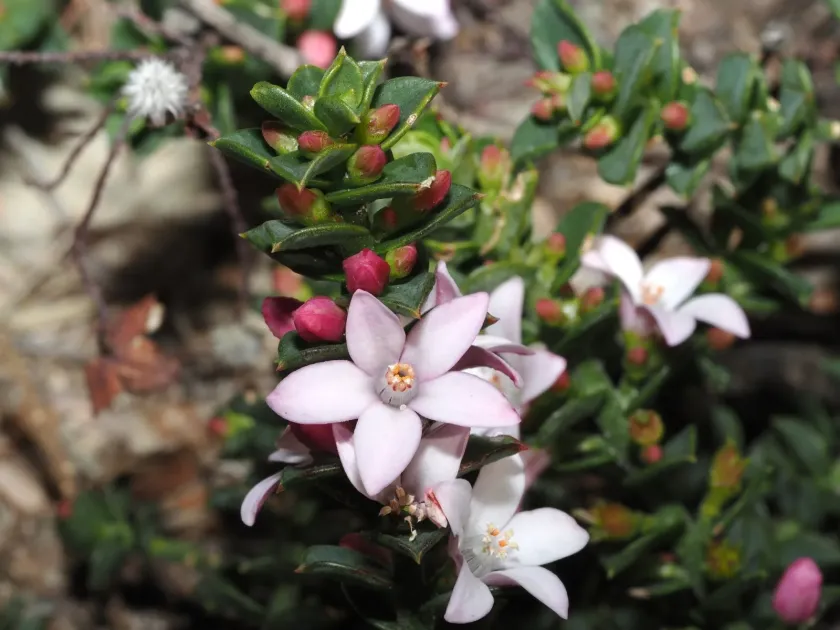
The plant features small, leathery leaves that resemble those of boxwood, leading to its common name. Its flowers are typically white or pinkish, blooming in clusters that add significant aesthetic appeal to temperate landscapes during the spring season.
Cultivation requires well-draining, acidic, and sandy soil to mimic the plant's natural habitat. It thrives in full sun or light shade, provided the environmental conditions are not overly humid, which could lead to crown rot or other fungal complications.
Regarding climate, Philotheca buxifolia is not frost-tolerant. In agricultural practice, it is often grown in containers in non-native climates, allowing for indoor winter protection when temperatures drop significantly below 10 degrees Celsius.
This shrub is highly regarded for its utility in the cut-flower industry. The aromatic, long-lasting foliage and blooms are harvested for professional floristry, making it a niche but valuable crop for specialized growers in appropriate climate zones.
Main diseases and pests
Root rot, primarily caused by Phytophthora species, is the most significant threat to this crop. Proper irrigation scheduling is critical, as waterlogging the root system is almost always fatal for this drought-adapted species.
Pest management should focus on monitoring for spider mites and scale insects, particularly when grown in sheltered conditions or greenhouses. Integrated pest management, including the use of horticultural oils, is recommended for effective control.