
Long-leaf waxflower
Philotheca myoporoides
Description
Growing requirements
Philotheca myoporoides, commonly known as the Long-leaf waxflower, is a robust evergreen shrub belonging to the Rutaceae family. Native to the diverse landscapes of eastern Australia, this plant has adapted to survive in various conditions, ranging from sheltered forests to exposed rocky outcrops.
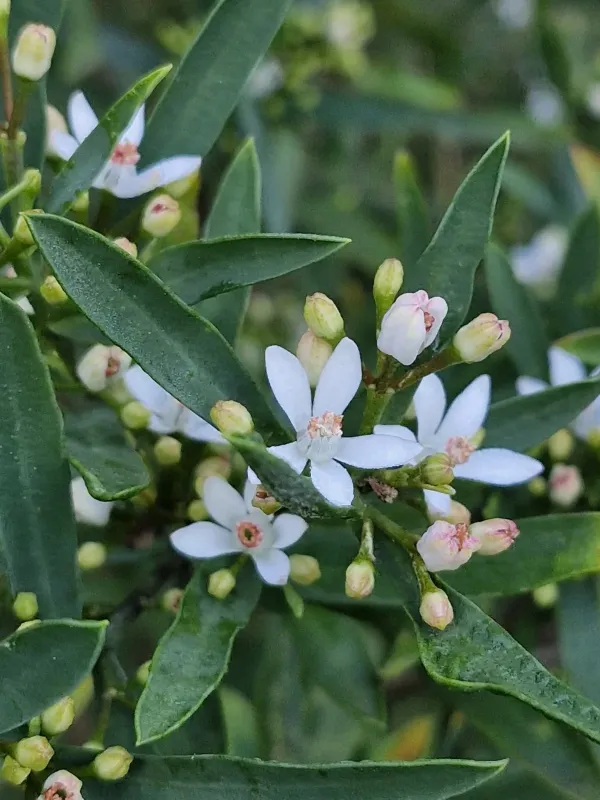
Botanically, it is recognized for its dense, leathery foliage that releases a distinct, pleasant citrus-like fragrance when crushed. The shrub typically grows to a height of 1–2 meters, producing an abundance of star-shaped white or pale pink flowers that appear in late winter and spring.
The plant thrives in well-draining soils with a slightly acidic to neutral pH. It is crucial to avoid heavy, waterlogged clays, as the root system is highly susceptible to rot. Incorporating coarse sand or organic matter into the planting site can significantly improve drainage.
In terms of climate, Philotheca myoporoides prefers temperate conditions with moderate moisture levels. While it can tolerate light frosts, it is not hardy in freezing climates and should be sheltered or brought indoors during extreme winter conditions in colder regions.
Agricultural management primarily focuses on maintenance pruning, which is best performed immediately after flowering. This practice prevents the plant from becoming woody and leggy, ensuring a compact shape and encouraging prolific flower production for the following year.
Main diseases and pests
The primary threats to this species are root and crown rot pathogens, particularly Phytophthora, which proliferate in poorly drained soils. Adhering to strict watering schedules is the most effective preventative measure against these soil-borne diseases.
Pests are generally minimal but can include aphids, mealybugs, and spider mites, especially in dry, indoor environments or overcrowded glasshouses. Monitoring the underside of leaves for these pests and using insecticidal soaps can manage minor infestations effectively.