
Phillyrea latifolia
Phillyrea latifolia L.
Description
Growing requirements
Phillyrea latifolia, commonly known as mock privet, is a robust evergreen shrub or small tree belonging to the Oleaceae family. Native to the Mediterranean basin, it is naturally adapted to regions with hot, dry summers and mild, wet winters, exhibiting high drought tolerance.
Regarding soil requirements, the species thrives in well-drained, lime-rich, or stony soils. It performs poorly in heavy, waterlogged ground, making excellent soil drainage the most critical factor for successful long-term cultivation.
The plant demands a sunny position to develop its characteristically dense, bushy habit. While it is hardy in many Mediterranean-like climates, young plants benefit from some protection against severe, drying winter winds to prevent foliage damage.
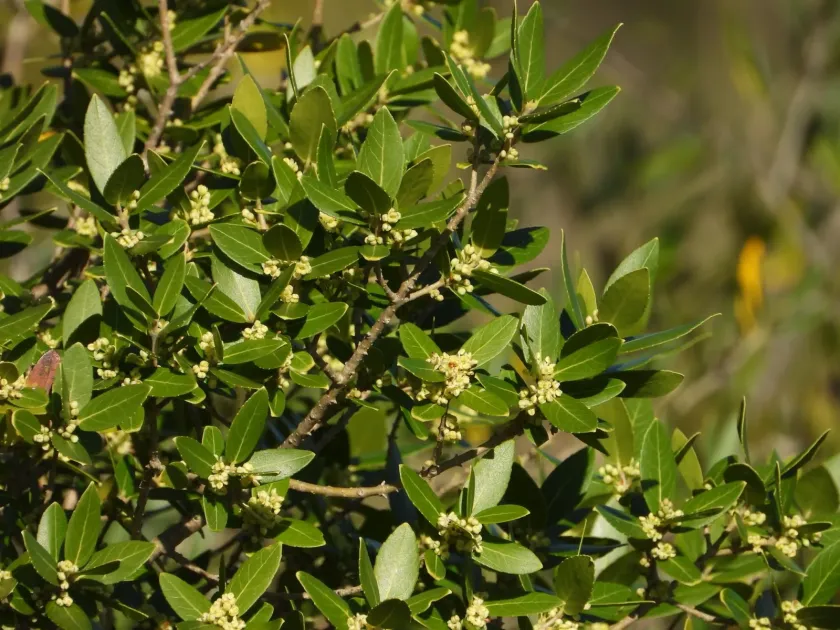
Botanically, it features leathery, dark green leaves and small, fragrant white-to-greenish flowers that bloom in spring. These traits make it an excellent choice for hedge formation, as the plant responds very well to regular pruning and shaping.
In landscaping, Phillyrea latifolia is valued for its evergreen nature and structural integrity. It is widely used in xeriscaping and coastal gardens where it acts as a resilient buffer against environmental stressors and contributes to biodiversity.
Main diseases and pests
The primary threats to the plant's health are related to fungal pathogens, often triggered by excessive soil moisture and poor air circulation within the canopy. Regular thinning of the branches helps maintain the hygiene of the shrub.
Insect pests such as scale insects (Coccidae) are a frequent concern, as they adhere to stems and leaves, feeding on plant sap. Heavy infestations can lead to sooty mold growth on the honeydew secreted by these pests, requiring prompt intervention.
Spider mites can occasionally become problematic during prolonged periods of hot and dry weather. These tiny pests cause yellowing and stippling of the foliage, which can significantly reduce the ornamental value of the specimen.
Integrated pest management is recommended for this culture, emphasizing the importance of monitoring. Early detection of symptoms allows for mechanical removal or targeted treatment, minimizing the need for broad-spectrum chemicals.
Overall, Phillyrea latifolia is a resilient species with few significant enemies when grown in appropriate site conditions. Most issues can be avoided through careful site selection and the implementation of sound horticultural practices.