
Purple-spotted mock orange
Philadelphus purpureo-maculatus
Description
Growing requirements
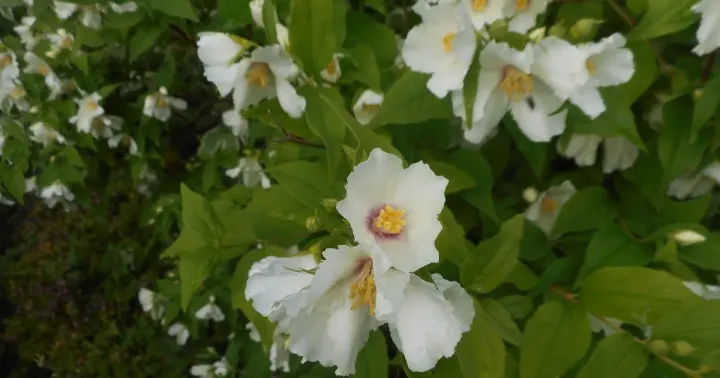
The purple-spotted mock orange (Philadelphus purpureo-maculatus) is a deciduous shrub belonging to the Hydrangeaceae family. Known for its fragrant flowers adorned with distinctive purple centers, it is a sought-after selection for ornamental gardens.
The species thrives in locations with full sun to partial shade, where the light exposure encourages prolific flowering. Consistent light is necessary for the plant to maintain its structural integrity and prevent the branches from becoming overly leggy.
Regarding soil, this shrub prefers well-drained, fertile, and slightly alkaline soil types. It is vital to avoid waterlogged conditions, which can be detrimental to the roots, so planting on elevated beds is often recommended if the soil is heavy clay.
Watering requirements are moderate but must be increased during prolonged dry spells to ensure the plant remains vigorous. Applying a balanced fertilizer during early spring promotes robust vegetative growth and strengthens the plant for the upcoming season.
This shrub demonstrates significant hardiness, adapting well to temperate climates. Pruning immediately after flowering is the best practice to shape the plant and encourage the development of new, healthy shoots for the following year.
Main diseases and pests
Aphids represent a primary threat, particularly during the early summer when new growth is succulent. Their feeding habits cause leaf curling and can lead to the formation of sooty mold on the foliage due to the honeydew they secrete.
Spider mites are another common pest, especially in hot, dry environments where they thrive under the shelter of dense leaves. Using fine mist sprays to increase local humidity is a successful natural deterrent against these tiny pests.
Leaf spot diseases, caused by various fungal pathogens, may manifest as dark blotches on leaves during wet seasons. Improving air circulation around the shrub by thinning out internal branches is the most effective cultural method to prevent this.
Weevils can occasionally damage the leaves, causing ragged edges that detract from the plant's aesthetic value. Regular visual inspection of the shrub during the growing season allows for early manual removal of these insects before they reach critical numbers.
Proper sanitation, including the removal of dead or decaying organic matter from the base of the shrub, is essential. Keeping the area under the plant clean reduces the habitat for over-wintering pests and fungal spores, promoting plant health.