
Phellinus
Phellinus Quél.
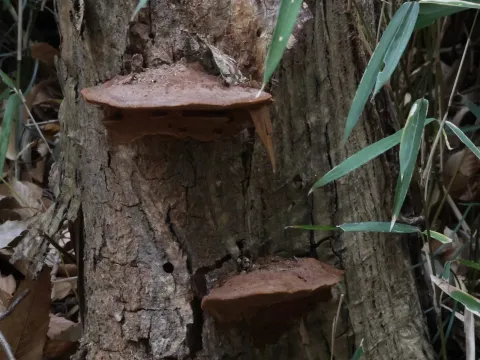
Phellinus is a genus of fungi belonging to the Hymenochaetaceae family. These organisms are primarily known as wood-decay fungi that thrive by colonizing both living and dead woody plants across diverse global ecosystems.
What the section contains

Phellinus
These fungi are found in a wide variety of environments, ranging from temperate forests to tropical climates. They are characterized by their ability to survive under various atmospheric conditions, provided a suitable woody host is present.
The botanical structure of Phellinus is defined by perennial, lignified fruiting bodies. These sporocarps are typically woody or corky, often exhibiting a brown or yellowish-brown hue, and are designed to persist for several growing seasons.
Unlike agricultural crops, Phellinus is not cultivated. It plays a dual role: it is a vital component of the natural nutrient cycle by breaking down wood, yet it acts as a severe parasite in managed forests and fruit orchards.
Successful colonization by these fungi requires high relative humidity and accessible entry points on the host tree. Once established, the mycelium spreads through the heartwood, progressively weakening the structural integrity of the host.
Phellinus species are notorious for causing white rot, a condition that degrades lignin and cellulose, leading to a significant loss of structural strength in tree trunks. This poses a major risk for timber value and safety.
Effective management relies on strict silvicultural practices. Sanitation cutting is the primary method for controlling the spread, which involves identifying and removing infected trees to prevent sporulation from affecting healthy specimens.
Maintaining tree vigor is essential for natural defense. Proper fertilization and irrigation schedules help trees maintain a strong barrier against fungal ingress, while careful pruning avoids unnecessary damage to the bark.
Mechanical damage from machinery or storm events increases the risk of infection. Wounds should be treated with protective dressings to prevent spores from germinating in the exposed vascular tissues of the tree.
Monitoring the presence of fruiting bodies is the most reliable diagnostic tool for identifying infected trees within a forest or plantation, prompting immediate action to preserve the remaining healthy stock.