
Long beech fern
Phegopteris connectilis
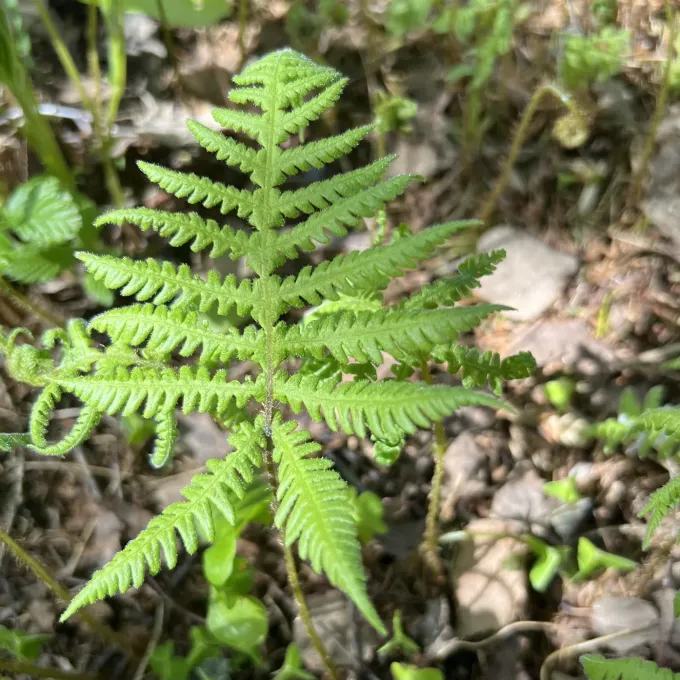
Description
Growing requirements
The long beech fern (Phegopteris connectilis) is a perennial, rhizomatous fern belonging to the Thelypteridaceae family. It is widely recognized for its delicate, triangular fronds and its preference for damp, temperate woodland habitats.
This species is native to the northern temperate and subarctic regions of the Northern Hemisphere. It typically thrives in cool, moist forest floors, near stream banks, and in shaded rocky ravines, where it forms extensive colonies through its creeping underground stems.
For successful cultivation, the long beech fern requires a location that mimics its native habitat: deep to partial shade is essential. The plant is highly sensitive to heat and dry air, which can cause severe dehydration and leaf scorch during the summer months.
The soil requirements focus on moisture retention combined with excellent drainage. A rich, acidic, and organic-based soil substrate is ideal for maintaining the plant's health and promoting the steady expansion of its rhizome network.
In gardening and horticulture, the long beech fern is primarily valued as an ornamental groundcover for woodland or shade gardens. Its elegant, finely textured foliage provides a sophisticated, naturalistic aesthetic suitable for shaded borders and rockeries.
Main diseases and pests
The most significant threats to the long beech fern are fungal pathogens encouraged by poor air circulation and waterlogged soil conditions, which lead to root and crown rot.
Slugs and snails are the primary insect-related pests for this fern, often feeding on the succulent emerging fronds in spring, causing noticeable damage to the foliage.
In environments with insufficient humidity, spider mites can become an issue, manifesting as small yellow dots on the fronds and leading to overall plant decline.
Preventative maintenance involves keeping the soil consistently moist but never waterlogged and ensuring the surrounding area remains clear of debris that could harbor pests.
Cultural control, such as manual inspection and ensuring adequate spacing between plants, is effective in managing these threats and maintaining a vigorous fern collection.