
Phalaenopsis equestris
Phalaenopsis equestris (Schauer) Rchb. f.
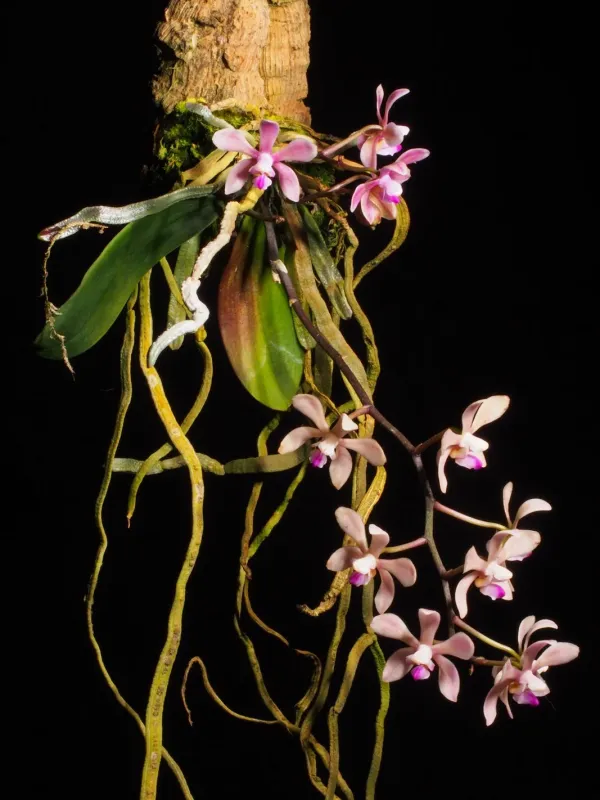
Description
Growing requirements
Phalaenopsis equestris is an epiphytic orchid species belonging to the Orchidaceae family, native to the tropical regions of the Philippines and Taiwan. It typically grows in humid, shaded environments attached to tree trunks.
For optimal growth in greenhouse or indoor settings, the plants require a stable temperature range between 22 and 28 °C. High ambient humidity, maintained at 60–70%, is crucial for the development of healthy foliage and roots.
The substrate must ensure excellent aeration for the roots. A mixture of fine pine bark, horticultural charcoal, and sphagnum moss is recommended to provide both drainage and necessary moisture retention.
Light requirements for this species include bright but indirect light. Direct exposure to intense sunlight should be avoided to prevent chlorophyll degradation and leaf burns on the plant.
Watering should be performed by soaking the pot in distilled or soft water, allowing the substrate to become saturated, followed by a thorough drain to prevent stagnation at the roots.
Yield
In terms of commercial value, Phalaenopsis equestris is highly regarded for its compact size, continuous blooming potential, and high number of flowers per inflorescence.
The plant produces branched spikes that can carry 10 to 20 small, delicate flowers, creating a significant decorative display. This makes it a favored cultivar for the houseplant and floral industry.
One of the most notable features is the production of keikis (plantlets) on the flower spikes, which allows for efficient vegetative propagation and increases the stock of mature specimens.
Successful cultivation results in robust plants capable of blooming multiple times per year, provided that fertilization with balanced orchid-specific nutrients is implemented during the growing phase.
The economic success of this crop depends on the quality of the root system and the health of the leaves, which are key indicators of the plant's vigor and future flowering potential.
Main diseases and pests
Fungal infections, such as Fusarium and various types of rot, represent the primary threat, usually triggered by poor ventilation and waterlogged substrate conditions.
Common pests include mealybugs and scale insects, which inhabit the foliage and consume plant sap, leading to stunted growth and reduced decorative quality.
Spider mites are a significant concern in low-humidity environments. These pests cause discoloration of leaves and can be difficult to eradicate if the infestation is not detected early.
Bacterial spot disease requires strict sanitation measures, including the isolation of affected plants and the removal of damaged tissues to prevent the spread of the pathogen.
- Sanitize all pruning tools between uses.
- Maintain adequate air circulation to prevent moisture accumulation.
- Use systemic insecticides or acaricides upon early detection of pests.