
Petrosimonia oppositifolia
Petrosimonia oppositifolia
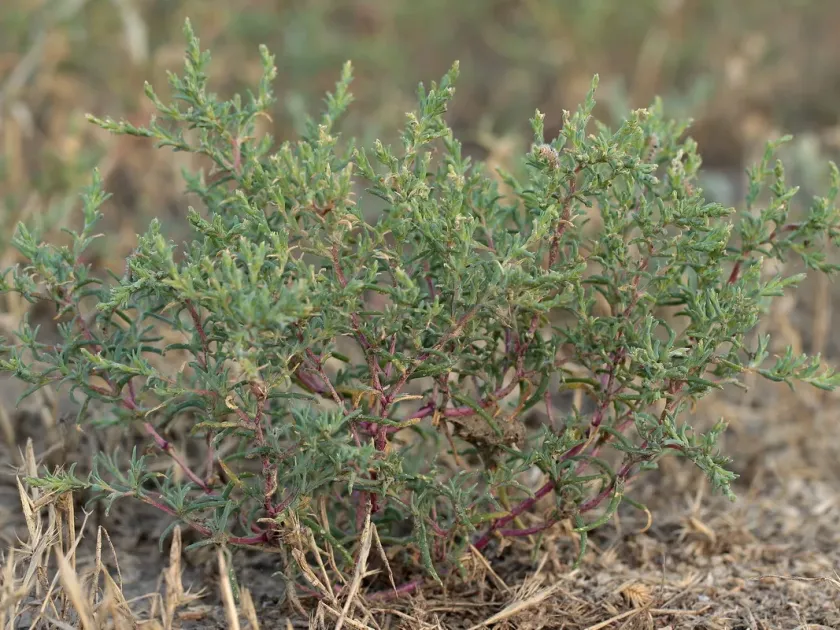
Description
Growing requirements
Petrosimonia oppositifolia is an annual herbaceous plant belonging to the Amaranthaceae family. It is recognized as a hardy halophyte, specifically evolved to thrive in environments with high soil salinity that inhibit the growth of traditional crops.
The native range of this species extends throughout the arid steppes, semi-deserts, and saline basins of Eurasia. It plays a significant ecological role in stabilizing fragile soils in regions prone to desertification and salt accumulation.
Botanically, the plant is distinguished by its opposite leaf arrangement and highly branched, succulent-like stems. These physiological adaptations allow it to manage water effectively while tolerating high concentrations of salts, such as sodium and chlorides, in the substrate.
The species requires high solar radiation and arid climatic conditions to reach its full vegetative potential. It is highly sensitive to waterlogging and shade, preferring open, exposed areas where it can dominate without competition from taller vegetation.
In terms of soil requirements, it is undemanding regarding nutritional richness but strictly dependent on saline levels. It acts as an indicator species for specific types of solonchaks and is currently studied for its potential in bioremediation and land reclamation projects.
Yield
Agricultural use is primarily centered on forage production for livestock, such as camels, sheep, and goats in saline-affected areas. The plant provides a crucial source of biomass during the late summer and autumn months when standard grazing grasses are no longer available.
Harvesting
Harvesting should be optimized to coincide with the pre-seed maturation phase. At this time, the biomass maintains optimal nutrient concentrations, and the fiber content is still digestible for ruminant animals, ensuring the best nutritional outcome for farm production.