
Petrosimonia brachiata
Petrosimonia brachiata
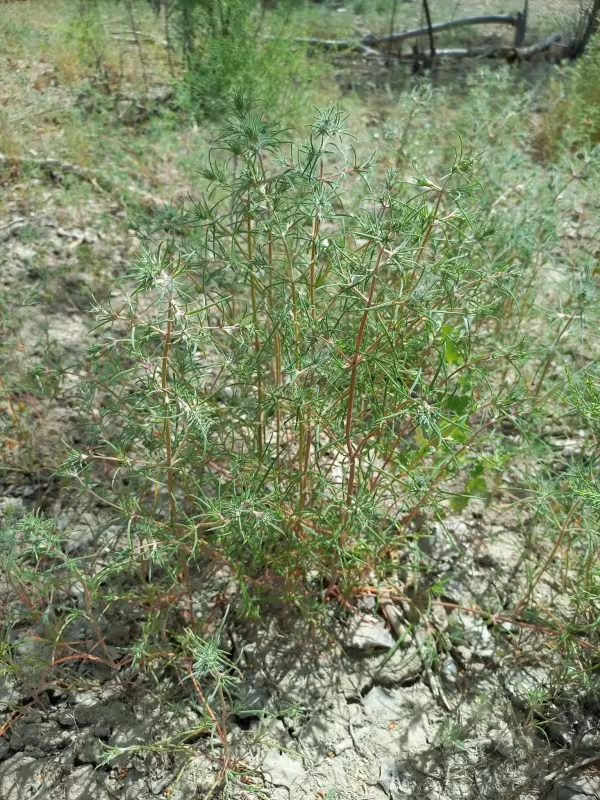
Description
Growing requirements
Petrosimonia brachiata is an annual herbaceous plant belonging to the Amaranthaceae family. It is a specialized halophyte, evolutionarily equipped to thrive in highly saline environments where standard crops cannot survive.
The plant is native to the steppe and semi-desert zones of Eurasia. It is primarily found in saline marshes and salt-affected lands, where it acts as a pioneering species, helping to stabilize the soil surface and manage salt dynamics.
Botanically, the plant is characterized by its opposite leaves and highly branched stems. This structural arrangement allows it to form dense, succulent-like mats that efficiently manage water storage under high-temperature conditions.
The climate requirements for Petrosimonia brachiata are typical of arid regions, with a high tolerance for drought and intense heat. It requires minimal rainfall to complete its life cycle and is highly resistant to soil salinity levels that would be toxic to most plants.
Soil requirements focus on salinity. While it does not require fertile soils, it actively thrives in substrates with high concentrations of sodium and magnesium. It is an excellent candidate for the biological remediation of degraded saline lands.
Yield
In agricultural practice, this species is utilized mainly as a forage source for camels, sheep, and goats in areas where traditional grass cover is sparse or absent. It provides essential nutrients to livestock during harsh seasonal periods.
Yield capacity is highly variable and depends on precipitation patterns during the spring. In wet years, the biomass production can be significant, providing a vital source of fodder in marginal land environments.
Beyond its role as feed, the plant serves as a key tool for soil reclamation. By accumulating salts in its tissues, Petrosimonia brachiata facilitates the biological reduction of salinity in the root zone when the biomass is periodically harvested.
Seed production is prolific, ensuring that the population persists even under heavy grazing pressure. This ensures that the ecological functions of the plant are maintained throughout the grazing season.
Future research into the species suggests potential for commercial cultivation in saline-affected areas to promote sustainable agriculture. Its hardiness makes it an ideal subject for improving land productivity in challenging environmental conditions.