
Petrocosmea forrestii
Petrocosmea forrestii
Description
Growing requirements
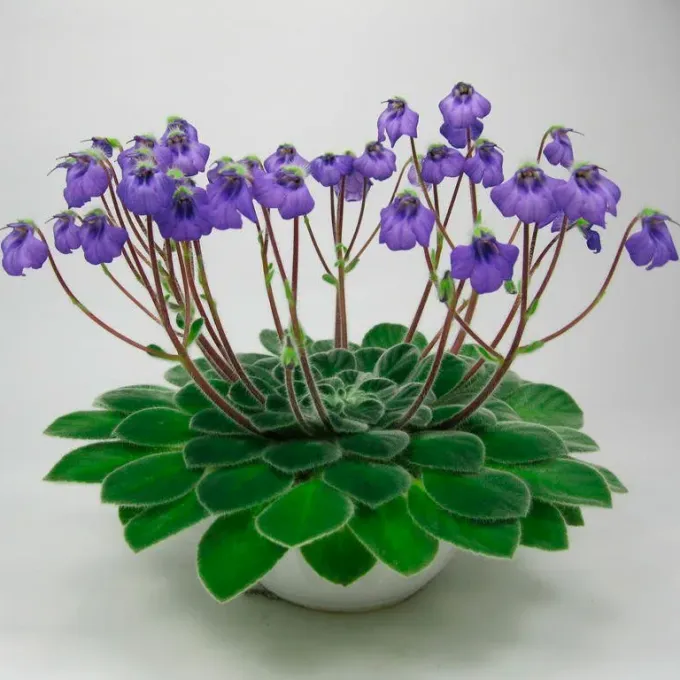
Petrocosmea forrestii is a perennial rosette-forming plant belonging to the Gesneriaceae family. Originating from the high-altitude mountainous regions of Yunnan province, China, this species typically thrives in shaded, moist environments, often establishing itself in rock crevices.
The plant is highly regarded for its compact, symmetrical rosette of foliage, which is often densely covered in fine hairs. These botanical features make it a prized specimen among gesneriad enthusiasts who appreciate miniature, ornamental plants with distinct growth patterns.
Cultivation requirements for this species include bright, indirect lighting. Direct sunlight is detrimental to the plant, as it causes rapid leaf scorch and dehydration. A north or east-facing windowsill is usually the most suitable location for maintaining healthy leaf development.
The substrate must be highly porous and moisture-retentive but never soggy. A mix comprising high-quality peat, perlite, and fine horticultural charcoal is recommended to ensure adequate drainage and aeration for the delicate root system.
Temperature management is crucial for the health of Petrocosmea forrestii. It prefers cool to moderate temperatures, consistently maintaining between 18°C and 22°C. Excessive heat during the summer months should be mitigated to prevent metabolic stress and dormancy issues.
Main diseases and pests
The primary threat to the health of the plant is overwatering, which leads to crown and root rot. Because the plant has a tight rosette structure, water trapped in the center often serves as an entry point for fungal and bacterial infections.
Pests such as mealybugs and spider mites can occasionally affect the plant, particularly if the surrounding air is too dry. Mechanical removal or mild insecticidal soaps are preferred, as the delicate, pubescent leaves are often sensitive to harsh chemical treatments.