
Petrocosmea cryptica
Petrocosmea cryptica
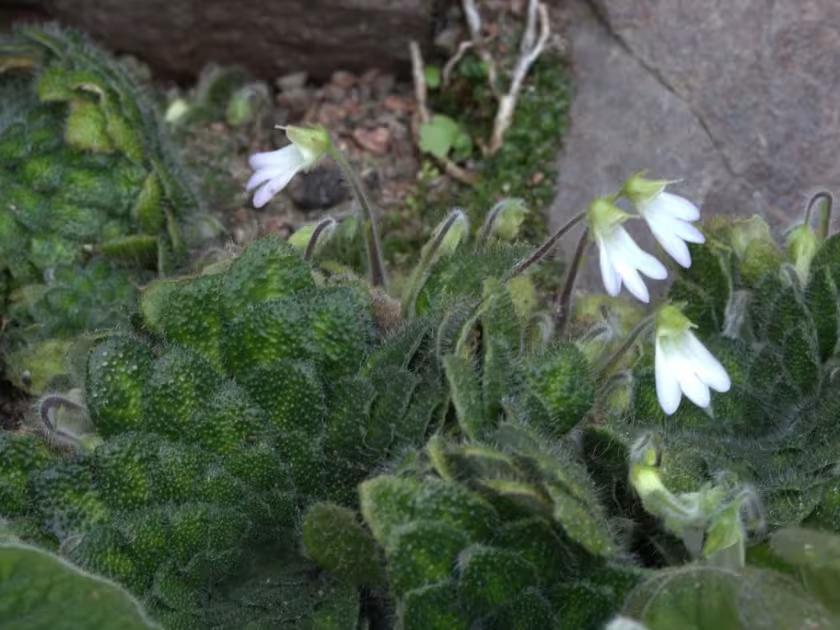
Description
Growing requirements
Petrocosmea cryptica is a distinctive herbaceous perennial belonging to the Gesneriaceae family. Originating from the mountainous regions of Asia, specifically China, this plant has adapted to rocky, shaded habitats with high humidity and stable temperatures.
The botanical structure of the plant is characterized by a basal rosette of succulent, pubescent leaves. These leaves often have a dense covering of fine hairs, which is a structural adaptation to protect the plant from transpiration in its natural foggy environment.
Climatic requirements focus on maintaining a cool to moderate temperature range, ideally between 18°C and 22°C. Petrocosmea cryptica thrives in low to medium light intensity; direct sunlight is detrimental and can quickly cause physiological damage to the delicate foliage.
Soil composition must prioritize aeration and drainage. A specialized mix containing peat moss, perlite, and fine bark is essential to keep the roots oxygenated while ensuring moisture is held without causing waterlogging, which is a major risk for this species.
Its primary use is in ornamental horticulture. Being a plant of high interest to collectors, Petrocosmea cryptica is frequently grown in controlled environments like terrariums, where the microclimate can be managed to mimic its native rock-dwelling habitat.
Main diseases and pests
The most significant threat to Petrocosmea cryptica is crown rot caused by overwatering or poor drainage. Once pathogens enter the base of the rosette, the structural integrity of the plant declines rapidly, often leading to total loss of the specimen.
Pest management is complicated by the leaf trichomes, which offer shelter for mealybugs and spider mites. Manual removal is often difficult, necessitating the use of systemic pesticides that are safe for use on soft-leaved Gesneriads.
Botrytis cinerea, a grey mold fungus, poses a constant risk, especially in environments where air circulation is insufficient. Increasing ventilation around the plants is a critical prophylactic measure to ensure leaves remain dry and healthy.
Nutrient toxicity, resulting from high levels of dissolved minerals in tap water or excessive fertilization, manifests as yellowing of leaf edges. It is highly recommended to use distilled or filtered water to maintain the health of the root system.
Regular sanitation, including the prompt removal of decaying or damaged leaves, is mandatory to prevent the spread of opportunistic fungal diseases. Keeping a clean growing environment is key to the longevity of the plant.