
Pentameris dregeana
Pentameris dregeana
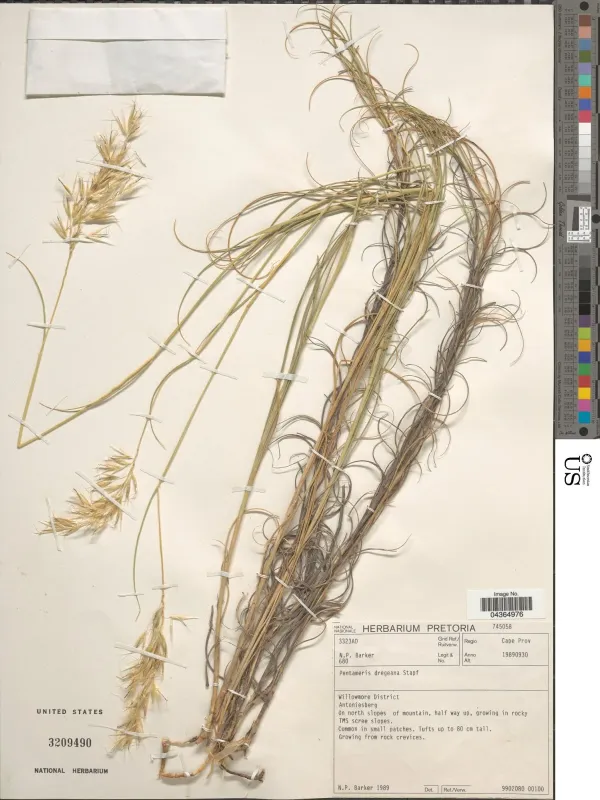
Description
Growing requirements
Pentameris dregeana is a perennial grass species belonging to the family Poaceae. It is native to the South African region, thriving in the unique environment of the Fynbos biome.
The plant naturally grows in acidic, nutrient-poor, and stony soils. When cultivated, it requires exceptionally well-drained substrates to prevent root asphyxiation, which is a common cause of failure for this species.
It prefers a Mediterranean climate, characterized by cool, wet winters and warm, dry summers. It is well-adapted to high light intensity and is highly resistant to drought stress.
Botanically, this grass forms dense tufts with rigid, narrow leaves, which are structural adaptations to intense sun and strong winds. The root system is robust, allowing the plant to stabilize itself in rocky terrains.
Its primary agricultural and horticultural uses include soil stabilization, restoration ecology, and specialized landscaping that mimics the biodiversity of its native habitat.
Main diseases and pests
The primary threats to this culture are fungal diseases, particularly those that thrive in high humidity or stagnant air conditions. Root rot is the most common pathology in poorly managed soil.
Pests such as specialized grass-feeding insects can affect foliage and reproductive parts. Constant monitoring is required to maintain the vitality of the plant during the growing season.
Improper soil selection, specifically excessive moisture retention, poses a critical risk to the crop's longevity. Ensuring optimal aeration of the root zone is mandatory for successful growth.
Competition from invasive plant species can significantly hinder development, as Pentameris dregeana requires clear access to resources without strong interference from fast-growing weeds.
Integrated pest management strategies are recommended, focusing on preventative measures rather than heavy chemical usage, as the species can be sensitive to certain agricultural sprays.