
Arrow Arum
Peltandra virginica
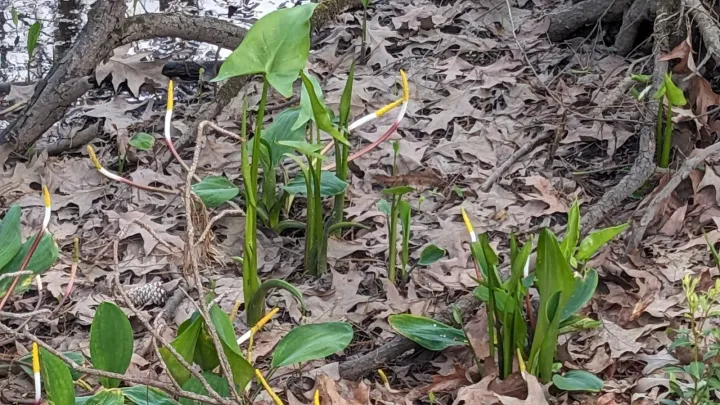
Description
Sowing dates
Sowing of Peltandra virginica seeds is best performed immediately after harvesting in the autumn to ensure they undergo the necessary cold stratification period over the winter. Seeds should be sown in moist, silty soil or shallow water to promote successful germination in the following spring.
Vegetative propagation is achieved by dividing the rhizomes, ideally in early spring before the plant enters its active growth phase. Divided segments should be planted firmly into the substrate at a depth of 5 to 15 centimeters to ensure stability against water movement.
Spacing is critical for the development of mature plants; a density of 3 to 5 plants per square meter is generally recommended. This allows sufficient room for the plant's characteristic arrow-shaped leaves to expand without excessive competition.
For artificial aquatic systems, ensure that the water level remains consistent throughout the initial establishment phase. Fluctuations in water depth during the first few weeks can hinder root development and weaken the young plants.
Protection from waterfowl is highly recommended during the early growth stages, as birds often forage on young shoots and seeds. Using simple mesh coverings or protective cages can significantly improve the establishment success rate of the crop.
Growing requirements
Peltandra virginica, commonly known as Arrow Arum, is a member of the Araceae family. It is a perennial herbaceous plant naturally adapted to wetland environments, including river banks, swampy forests, and the margins of ponds and lakes across North America.
The plant thrives in full sun to partial shade. While it exhibits tolerance to varied light conditions, optimal growth and leaf development are achieved when the plant receives adequate sunlight, which supports robust photosynthesis and overall health.
Soil requirements focus on nutrient-rich, organic-heavy sediments. The plant prefers slightly acidic to neutral soil conditions, typically found in muddy, saturated ground. It is highly efficient at extracting nutrients from aquatic substrates.
Arrow Arum is known for its hardiness, capable of surviving in diverse climates provided there is constant access to water. It is well-suited for temperate regions where winter temperatures allow for the survival of the rhizome system below the frost line.
Water quality and depth are the primary environmental drivers for this species. It requires consistent saturation and prefers still or slow-moving water, making it an excellent candidate for managed wetlands and bioremediation applications.
Yield
Historically, Arrow Arum has been used as a food source, as the rhizomes contain significant amounts of starch. However, they must be processed correctly via thorough cooking or drying to neutralize calcium oxalate crystals before consumption.
Beyond food potential, the plant serves as a vital component in ecological restoration projects due to its ability to filter water. It effectively traps sediments and absorbs excess nutrients, thereby improving the overall water quality in its immediate vicinity.
Seed production occurs towards the end of the summer, with the plant producing berries within a fleshy spathe. Harvesting these for propagation requires careful timing to ensure the seeds are fully mature before the spathe degrades.
Rhizome productivity peaks after several years of growth once the plant has established a dense subterranean network. Periodic thinning or division of the colony is recommended to maintain optimal yield and prevent overcrowding in a given space.
The total biomass harvested from healthy stands of Peltandra virginica can also be utilized for organic matter enrichment or as a stabilizing agent for shorelines, where its complex root system prevents erosion effectively.
Main diseases and pests
Peltandra virginica is generally robust, but it can be susceptible to fungal leaf spots if grown in stagnant water with poor aeration. Maintaining water movement or ensuring an adequate oxygen supply can mitigate these risks effectively.
Pests such as aphids may occasionally congregate on the foliage during periods of extreme heat. Biological control methods, such as encouraging natural predators, are usually sufficient to manage these populations without the need for synthetic chemicals.
Herbivory by rodents, specifically muskrats or beavers, can pose a risk to the fleshy rhizomes. Protecting the perimeter of aquatic planting zones with physical barriers is a standard procedure in areas where these animals are active.
Invasive aquatic plant species represent a significant threat, as they can outcompete Arrow Arum for sunlight and space. Regular monitoring and physical removal of invasive competitors are essential to keep the planting zone healthy.
Environmental contamination, particularly heavy metal accumulation in aquatic substrates, poses a risk to the plant's health and safety for human use. Regular monitoring of the water and sediment composition is necessary for any commercial or food-oriented production.