
Pellia epiphylla
Pellia epiphylla
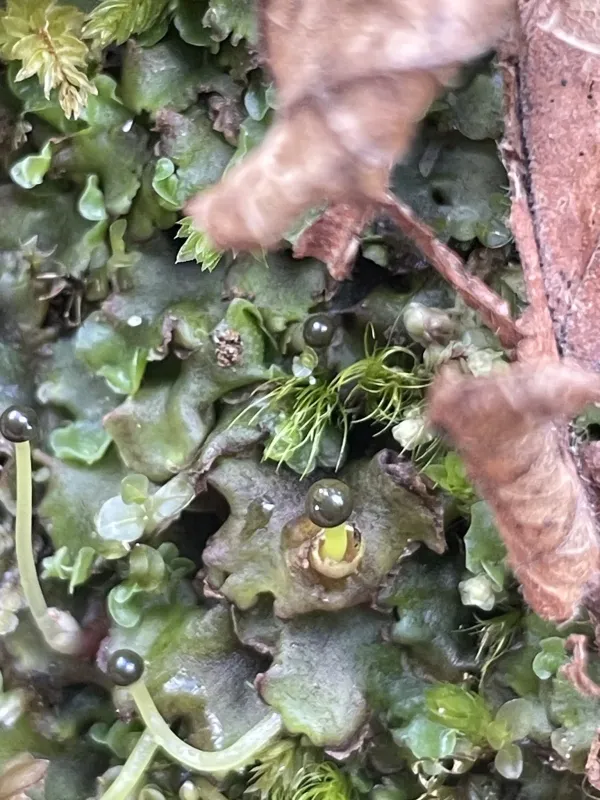
Description
Growing requirements
Pellia epiphylla is a thallose liverwort belonging to the Pelliaceae family. Unlike vascular plants, it lacks roots and true leaves, consisting instead of a flat, green thallus that branches dichotomously.
This species is widely distributed across the Northern Hemisphere. It typically thrives in moist, shaded environments such as riverbanks, damp woodland soils, and the base of shaded rock outcrops.
The environmental requirements for Pellia epiphylla are strictly tied to high humidity and stable microclimatic conditions. It is classified as a hygrophyte, meaning it is perfectly adapted to wet, water-saturated substrates.
In terms of soil, it prefers humic-rich, slightly acidic to neutral substrates. The plant relies on the moisture retention capacity of the substrate, making clay-rich soils ideal for sustained growth in natural settings.
As a cultivated plant, it is used in terrariums and damp greenhouse environments for its aesthetic value. Its ability to create a lush, green carpet makes it a popular choice for specialized indoor plant setups.
Main diseases and pests
Threats to Pellia epiphylla are primarily environmental, with habitat destruction and the drying out of traditional water sources acting as the most significant limiting factors for population growth.
Pests are rarely an issue for this species. Its biological defenses include specific chemical compounds that act as natural repellents, making the plant less appealing to common insect pests.
Fungal infections remain the primary disease risk. Stagnant water coupled with poor air circulation can lead to the development of rot, which rapidly spreads across the colony if left unchecked.
Chemical sensitivity is a hallmark of this plant. It is highly intolerant to industrial runoff or high concentrations of agricultural chemicals, which can cause significant damage to the thallus tissue.
Competition from more aggressive, invasive plant species poses a threat in changing environments, as Pellia epiphylla often lacks the vertical growth mechanism to outcompete faster-growing vascular plants.