
Pelagodoxa
Pelagodoxa mesocarpa
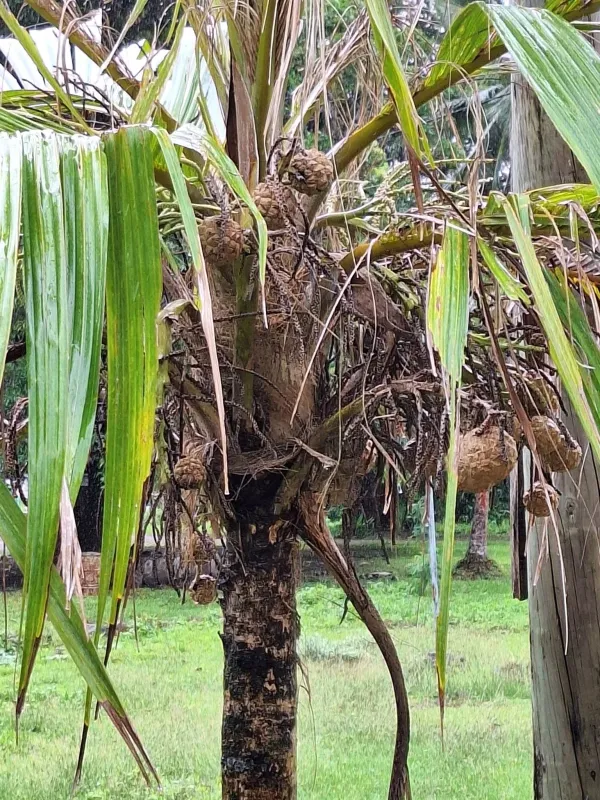
Description
Sowing dates
Propagation of Pelagodoxa is exclusively through seeds, which require immediate planting after harvest due to their short viability period. Freshness is the most critical factor for successful germination.
Seeds should be planted in a well-draining, highly organic medium that mimics the forest floor. Providing high humidity and constant moisture is essential during the entire germination process.
Maintain temperatures between 25 and 30 degrees Celsius. Bottom heat can significantly accelerate the development of the embryo and ensure a more uniform germination rate.
Patience is required as the germination process can be unpredictable and lengthy. It is recommended to keep the seeds in a greenhouse environment to avoid drying out.
Seedlings are extremely sensitive to transplantation. When they develop the first true leaves, they should be transferred to larger containers with minimal disturbance to the root ball.
Growing requirements
Pelagodoxa mesocarpa, belonging to the Arecaceae family, is a rare palm native to the Marquesas Islands. It is strictly adapted to tropical rainforest environments with high atmospheric humidity.
The plant demands a consistently moist, nutrient-rich soil that is well-drained. It cannot withstand waterlogging, which often leads to rapid decay of the root system.
Bright, indirect light is preferred for this species. Direct tropical sunlight can be harmful to the leaves, leading to severe burns, especially in younger, less established specimens.
Temperature stability is vital for this palm. It does not tolerate cold drafts or temperatures below 15 degrees Celsius, making it strictly a plant for humid tropical zones.
Adequate ventilation is necessary to prevent the buildup of stagnant air, which can promote fungal growth on the foliage and stem during periods of high humidity.
Yield
The economic utility of this palm is primarily focused on the ornamental and botanical markets. It is not grown as a broad-scale food crop due to its scarcity and slow growth rate.
The fruits of Pelagodoxa are fibrous, spherical drupes. While some local consumption may occur, they are not currently a significant agricultural commodity for export or mass market production.
Its primary value lies in its aesthetic appeal in high-end tropical landscaping. The unique leaf structure creates a dramatic focal point in botanical collections and private tropical gardens.
Harvesting is performed by hand, ensuring that the fragile fruits are not damaged during collection. Careful handling is required to preserve the quality of the seeds for further propagation.
Future potential may lie in conservation and limited sustainable cultivation for specialized nurseries, as the species remains relatively rare in the global trade.
Main diseases and pests
Root rot, caused by overwatering and poor soil aeration, is the most significant threat to the health of the Pelagodoxa palm. Preventive drainage is the most effective solution.
Pests such as mealybugs and scale insects frequently target the foliage. Regular inspection of the undersides of the leaves is recommended to detect infestations at an early stage.
Fungal infections can develop on the leaves if humidity levels are high but airflow is restricted. Applying suitable fungicides and increasing ventilation can mitigate these risks.
Spider mites may occasionally occur if the surrounding humidity drops significantly. Maintaining a moist environment is the best natural deterrent against these small pests.
Nutrient deficiencies often manifest as leaf yellowing or stunted growth. Using a slow-release, palm-specific fertilizer helps in maintaining a robust and healthy plant appearance.