
Pectis prostrata
Pectis prostrata Cav.
Description
Growing requirements
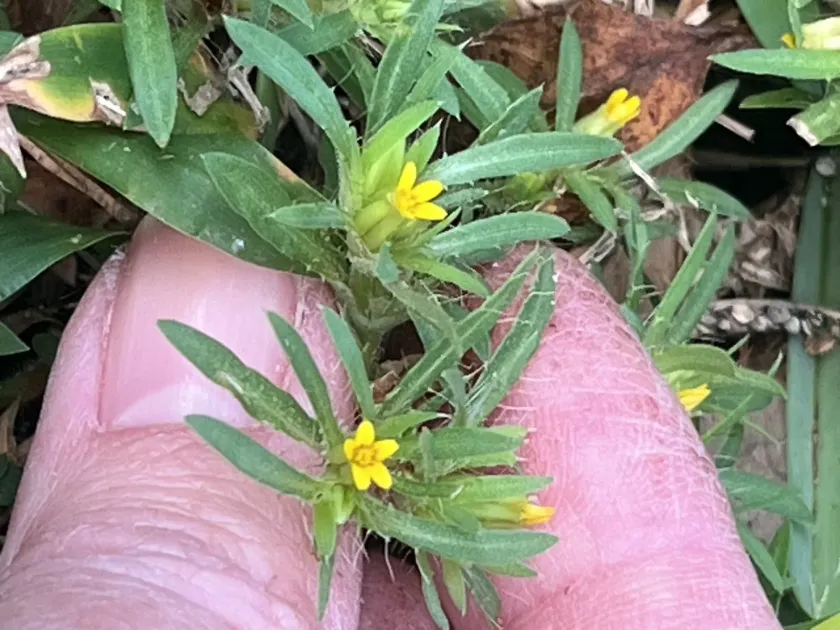
Pectis prostrata is a distinct annual herb belonging to the Asteraceae family. It is characterized by its prostrate growth habit, forming dense mats of foliage adorned with small, bright yellow flower heads that bloom throughout the warm season.
Native to tropical and subtropical regions of the Americas, this species thrives in open, disturbed habitats. It has evolved to survive in nutrient-poor, sandy soils where competition from larger vegetation is minimal.
In terms of climate requirements, this plant is strictly adapted to warm, frost-free environments. It performs best under full sun, which is essential for stimulating its blooming cycle and maintaining compact growth.
Soil drainage is the most critical factor for successful cultivation. The root system is sensitive to prolonged waterlogging, which often leads to rapid decay, necessitating the use of light, porous soil substrates.
Beyond its ornamental use as a ground cover, Pectis prostrata is known for its fragrant foliage containing essential oils, which holds potential for secondary agricultural applications in the fragrance or botanical extracts industry.
Main diseases and pests
The primary threats to Pectis prostrata are fungal pathogens, specifically those causing root rot and damping-off, which frequently occur in poorly drained media or overly humid conditions.
Pest pressure from aphids and spider mites can be significant during dry, hot spells. These pests colonize the undersides of leaves, causing chlorosis and a decrease in photosynthetic efficiency.
Weed infestation presents a major obstacle during the seedling stage. Due to its slow initial growth rate, the crop can be easily overtaken by aggressive weeds, necessitating diligent weeding or the use of light mulch.
Low light conditions are detrimental to the plant, leading to "stretching" or etiolation, which compromises its structural integrity and makes it more susceptible to opportunistic pathogens.
Integrated pest management strategies should focus on maintaining proper air circulation and strictly avoiding over-irrigation to prevent the onset of fungal diseases common to the Asteraceae family.