
Pauridia capensis
Pauridia capensis
Description
Growing requirements
Pauridia capensis is a small perennial herbaceous plant that belongs to the Asphodelaceae family. It is recognized for its delicate structure and specific environmental adaptations characteristic of the Cape region.
The native distribution of this species is confined to South Africa, where it thrives in regions with a Mediterranean climate. The plant is evolutionarily tuned to grow during the wet, cool winter months and go dormant during the dry summer.
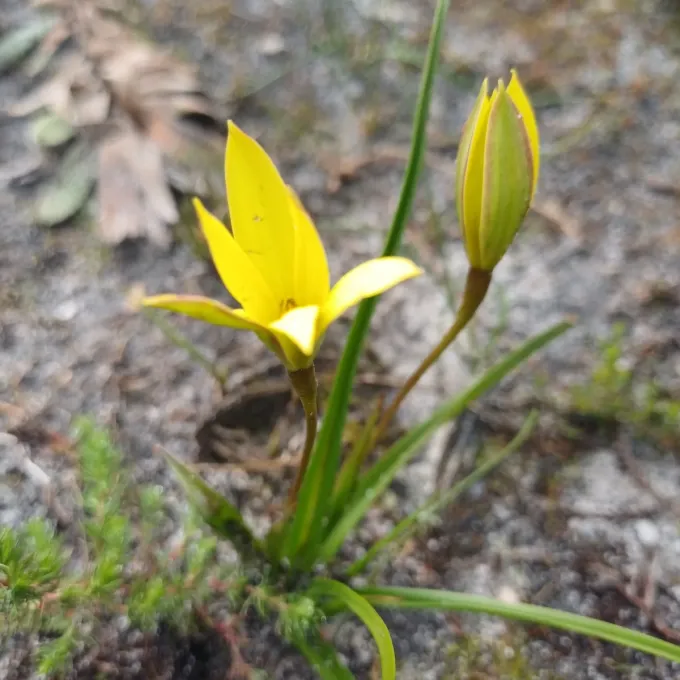
From a botanical standpoint, Pauridia capensis is a geophyte that propagates via small corms. The leaves are typically narrow, grass-like, and arranged in a basal rosette, providing an efficient profile for photosynthesis in a short growth window.
Successful cultivation requires soil that mimics its natural habitat: sandy, gritty, and exceptionally well-draining. Any soil compaction or waterlogging is highly detrimental to the health of the subterranean organs.
Solar exposure is essential for the plant to thrive. In a cultivation environment, it must be placed in a full-sun location to ensure proper development of the corm and to induce the production of its signature starry flowers.
Harvesting
The primary economic and horticultural use of Pauridia capensis is in the niche market of bulbous plant cultivation. It is highly valued by collectors and landscape designers for its ability to produce early spring blooms in containers or rock garden settings.