
Guarana
Paullinia cupana Kunth var. sorbilis (Mart.) Ducke
Description
Growing requirements
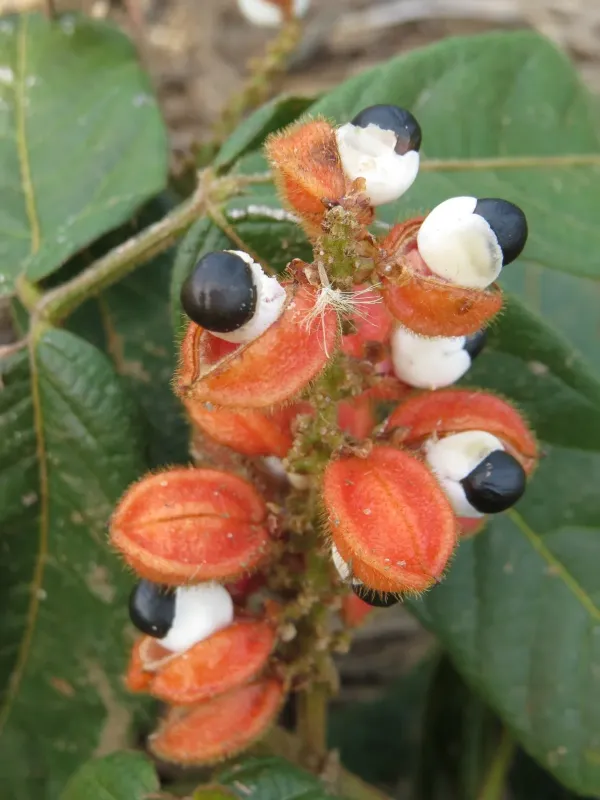
Guarana (Paullinia cupana) is an evergreen shrub or liana belonging to the Sapindaceae family. In its natural environment, the plant reaches a height of up to 10-12 meters, climbing structures using its tendrils.
The origin of guarana is the Amazon basin, primarily in Brazil. The plant prefers a humid tropical climate with consistent rainfall throughout the year and high temperatures, never dropping below 20 degrees Celsius.
Successful growth requires deep, fertile, well-drained soils with high organic matter content. The crop is extremely sensitive to waterlogging, so sites on hills or slopes with a light loam structure are preferred.
Optimal development of guarana occurs under partial shade during the first years of life. Mature plants require intense sunlight to form full reproductive organs and to increase the concentration of alkaloids in the fruits.
Agrotechnics include regular application of nitrogen and potassium fertilizers, as well as maintaining a mulching layer to retain moisture in the root zone and prevent soil overheating.
Yield
The economic use of guarana is centered around its seeds, which contain a high concentration of caffeine, several times higher than that of coffee beans. The production is widely used in the food and pharmaceutical industries.
Commercial plantations begin to produce a harvestable yield in the 3rd or 4th year after planting. Full fruit-bearing age is reached at 6-7 years, when the plant achieves the peak of its vegetative activity.
The average yield from one mature plant is about 1-2 kilograms of dry seeds per year. Intensive cultivation methods using selected varieties allow for increased production output.
After harvesting, the fruits undergo thermal processing and cleaning from the pulp. The resulting raw material is processed into powder or extract, which is the main commercial product in the energy drink market.
The economic efficiency of cultivation depends directly on adhering to the harvest schedule, as unripe or overripe seeds lose their pharmacological properties and market value rapidly.
Main diseases and pests
One of the most dangerous diseases of guarana is anthracnose, caused by the fungus Colletotrichum guaranicola. The disease affects leaves and young shoots, leading to significant crop losses and plantation degradation.
Among pests, insects that damage the root system and vascular tissue of the plant are common. An important element of control is maintaining agrotechnical cleanliness and removing affected specimens.
To minimize risks on plantations, integrated protection methods are used, combining biological preparations and maintaining optimal planting density to improve canopy ventilation.
Young plantations are particularly vulnerable to weed attacks that compete for nutrients. Regular weeding and mulching are critical operations to protect the seedlings.
Adherence to quarantine measures when importing planting material allows for preventing the spread of specific tropical pathogens capable of destroying large areas of crops in a short time.