
Paullinia cupana
Paullinia cupana Kunth
Description
Sowing dates
Paullinia cupana is a member of the Sapindaceae family and is an evergreen climbing shrub. The cultivation process begins with sowing seeds, which lose their viability very quickly, so they must be planted immediately after harvesting into well-moistened substrates.
In commercial operations, seeds are sown in specialized nurseries or containers under controlled humidity and shade conditions. Once the seedlings reach a height of 30–40 centimeters, they are transplanted into prepared trenches or planting pits.
The optimal time for establishing plantations in its native range is the beginning of the rainy season, which provides young plants with the necessary moisture reserves for successful rooting. Planting density is typically around 1000–1200 plants per hectare to ensure adequate space for vine growth.
For vegetative propagation, cuttings are used, which allows for the preservation of desirable varietal characteristics and shortens the time until the plant enters its productive phase. Cuttings are rooted in greenhouses using phytohormones to stimulate root development.
The selection of a planting site must avoid direct sunlight in the early stages, so intercropping with taller trees to create a natural canopy is a common practice.
Growing requirements
The crop is highly demanding in terms of climate, preferring tropical zones with average annual temperatures ranging from 24 to 28 degrees Celsius. An important factor is the absence of drastic temperature fluctuations and frosts, which are lethal to the plant's vegetative parts.
The plant requires high rainfall levels, between 2000 and 3000 mm per year, while efficient drainage is essential to prevent water stagnation around the roots. Guarana does not tolerate dry periods well, requiring regular irrigation in the absence of rain.
Soil preferences include deep, well-aerated loams or sandy loams with high organic matter content. Soil acidity (pH) should be in the slightly acidic to neutral range, which facilitates the optimal uptake of essential micronutrients.
Given its tropical origin, the crop needs protection from strong winds that can damage fragile vine-like shoots. Constant high air humidity is critical for normal photosynthesis and the successful development of fruits.
Agronomic management includes regular applications of balanced mineral fertilizers, especially nitrogen and potassium during peak growth phases, as well as maintaining weed-free conditions in the inter-row spaces.
Yield
Paullinia cupana begins producing marketable yields in its 3rd or 4th year after transplanting, reaching peak productivity by 6 to 8 years of age. A mature plantation can yield significant amounts of seeds when managed with proper agronomic practices.
Yield is heavily influenced by the genetic potential of the cultivar and adherence to fertilization schedules, averaging between 500 and 1500 kilograms of dried seeds per hectare. A key quality indicator is the concentration of active alkaloids within the fruits.
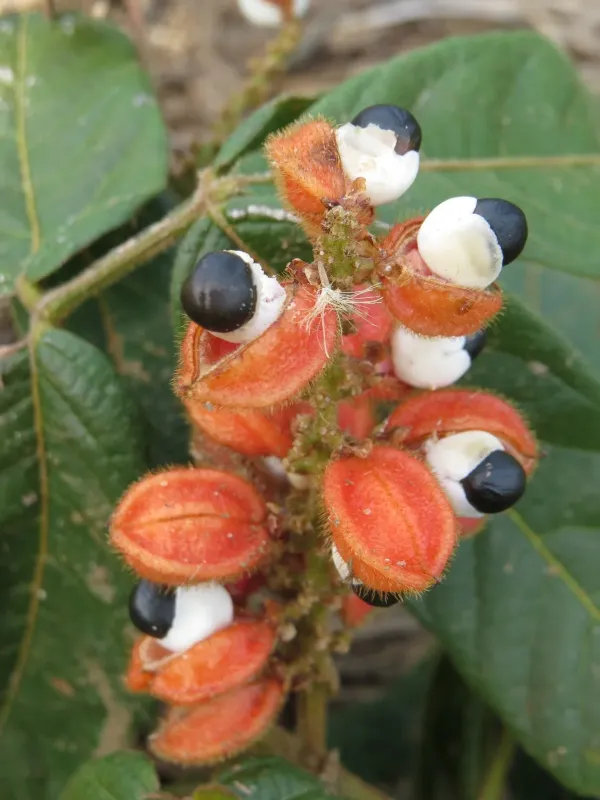
Guarana fruits are capsules that split open upon maturation, revealing seeds that resemble human eyes. Harvesting is done manually in several stages, as fruit ripening on a single plant is often asynchronous.
After harvesting, seeds undergo heat treatment, cleaning, and thorough drying to reduce moisture levels to 10–12%. This prevents raw material spoilage by fungal diseases and ensures stable long-term storage before processing.
The economic viability of the crop is driven by high demand from the pharmaceutical industry and energy drink manufacturers. High-quality raw material with superior caffeine (guaranine) content commands a significant market premium.
Main diseases and pests
The primary threat to plantations is anthracnose, caused by the fungus Colletotrichum guaranicola, which affects leaves and fruits. The disease spreads rapidly under conditions of high humidity and rainy weather.
Pests, such as various species of moth larvae and sap-sucking insects (e.g., scale insects), can significantly reduce vegetative biomass. Their presence requires consistent monitoring and timely application of bio-insecticides or fungicides.
Root rots resulting from improper irrigation can also lead to the loss of entire plantation sections. Prevention involves adhering to strict sanitary standards, removing affected plant parts, and ensuring proper canopy ventilation.
Control measures include the use of resistant hybrids, as well as maintaining spatial isolation between new and infected plantings. Systematic pruning helps reduce crown density, thereby lowering the risk of fungal infection hotspots.
Pest monitoring is conducted weekly, especially at the beginning of the growing season. Using integrated plant protection systems allows for minimizing environmental impact while maintaining the ecological purity of the final product.
Harvesting
Harvesting guarana is a labor-intensive process that requires high precision to avoid damaging the developing flower buds for the next season. Harvesters move through the rows, carefully cutting only the fully opened capsules.
Seeds are separated from the pulp and shell immediately after harvest to prevent fermentation and decay. The separation process must be handled with care to avoid damage to the seed coat, which contains key active compounds.
Drying is performed in specialized ovens at strictly controlled temperatures to prevent the destruction of caffeine compounds and preserve the specific flavor and aroma profile. Overheating the raw material leads to a loss of commercial value.
After drying, the seeds are sorted by size and quality and packed into airtight bags. Proper storage in a cool, dry place allows the seeds to maintain their properties for up to one year.
Traditional primary processing methods may involve grinding the seeds into a paste, which is then formed into blocks. Such products have high storage stability and remain highly sought after in local Latin American markets.