
Passerina rigida
Passerina rigida
Description
Growing requirements
Passerina rigida is a perennial shrub belonging to the Thymelaeaceae family. It is endemic to the coastal regions of South Africa, where it has adapted to survive in extreme maritime environments, particularly sandy dunes.
The plant thrives in well-drained, nutrient-poor sandy soils. It possesses a high tolerance for salinity and strong coastal winds, making it an essential species for maintaining the structural integrity of sand dune ecosystems.
Environmental requirements include a Mediterranean-type climate characterized by seasonal winter rainfall and dry, hot summers. The species requires excellent soil aeration to prevent root rot and physiological stress caused by waterlogging.
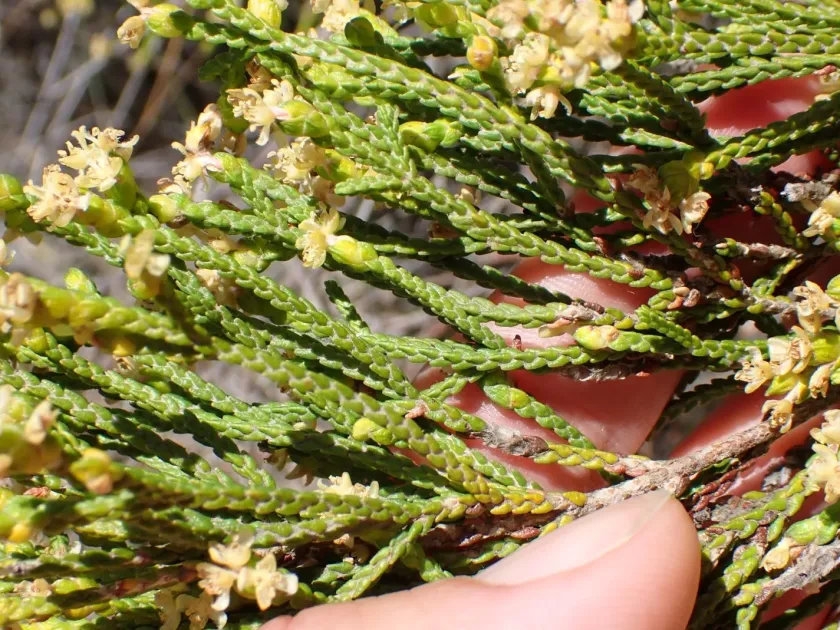
Botanically, the plant is recognized by its dense habit and small, scale-like leaves that are pressed tightly against the branches. This anatomical structure is a key adaptation to minimize transpiration in arid conditions.
Economically, Passerina rigida is utilized primarily for environmental conservation purposes. It serves as an effective ground-binding agent, preventing soil erosion in fragile coastal territories.
Main diseases and pests
The primary threats to Passerina rigida involve habitat loss caused by coastal urban development and the encroachment of invasive plant species that outcompete native vegetation for resources.
Root rot is the most common pathology, usually triggered by improper moisture management or poor soil drainage, which inhibits the plant's ability to maintain healthy root systems in its native climate.
While local insect populations may feed on the foliage, they rarely cause significant economic damage, as the plant is not cultivated on a commercial industrial scale outside of its ecological restoration use.
Competition from non-native species poses a long-term risk, potentially displacing Passerina rigida from its traditional habitat and leading to a reduction in its population density.
Effective management requires maintaining natural hydrological cycles and preventing the excessive use of mineral fertilizers, which can disrupt the delicate balance of the plant's symbiotic relationship with soil bacteria.