
Passerina montana
Passerina montana
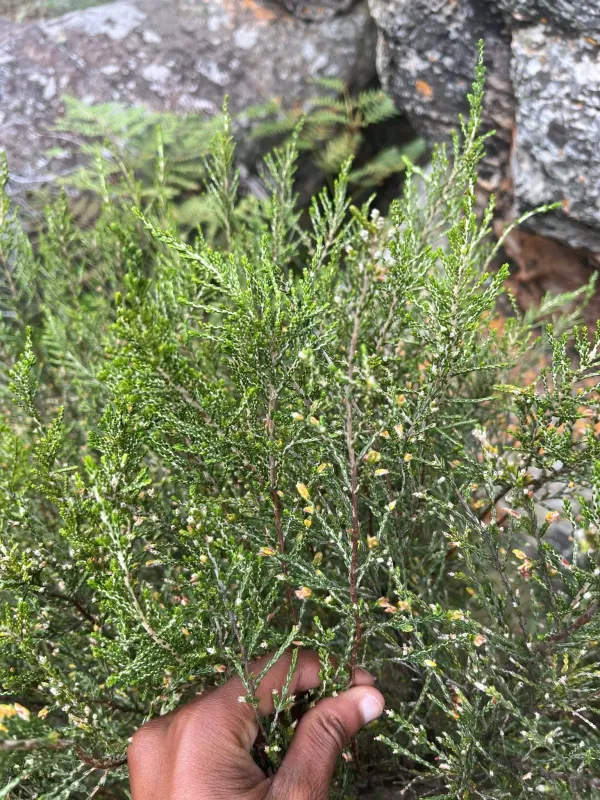
Description
Growing requirements
Passerina montana is a perennial shrub belonging to the Thymelaeaceae family. It is native to the high-altitude regions of South Africa, where it has adapted to thin soils and intense environmental conditions.
This species thrives in well-drained, nutrient-poor, sandy or rocky soils. Agricultural success with this plant depends heavily on mimicking its natural mountain environment, particularly regarding soil aeration and drainage.
The plant is highly heliophilic, requiring maximum sun exposure to maintain its compact growth habit. Reduced light levels often result in weak, spindly stems and increased susceptibility to diseases.
Passerina montana is xerophytic, meaning it is naturally adapted to survive with very little water. In cultivation, farmers must exercise caution with irrigation, as excess water is the primary cause of plant loss.
Temperature requirements are moderate, and while the plant can handle significant diurnal temperature variations, it is not frost-hardy. Controlled environment cultivation is recommended in regions with severe winters.
Yield
Currently, Passerina montana is not a staple agricultural crop, so standardized yield data is limited to small-scale research and nursery production records.
Yields of biomass are typically focused on either ornamental plant production or the extraction of specific phytochemicals for botanical research purposes.
The productivity of this crop is influenced by the precision of moisture management and the availability of essential micronutrients in the growing medium.
Consistent pruning during the growing season can enhance plant density and overall yield quality, ensuring the health of the individual specimens.
Successful cultivation requires long-term monitoring, as this shrub develops relatively slowly compared to common field crops.
Main diseases and pests
Root rot is the most common threat to Passerina montana. It typically occurs due to poor soil drainage or excessive watering regimes that prevent the root system from breathing.
Spider mites are the most frequent pests, especially in greenhouse conditions where low humidity and high temperatures can create an ideal environment for their proliferation.
Fungal pathogens such as powdery mildew may affect the foliage if there is poor air circulation. Proper spacing between plants is critical to mitigate this risk.
Early detection of infestation is essential. Regular inspections of the undersides of the leaves help to control pest populations before they cause significant damage.
Integrated pest management strategies, focusing on biological controls, are preferred to maintain the health and integrity of the delicate shrub foliage.
Harvesting
Harvesting of Passerina montana is performed at the peak of the growing cycle, when the biomass is sufficiently mature and structurally sound for further processing.
Careful manual cutting is the standard method for harvesting to prevent damage to the woody base of the plant, which would impair future regrowth.
Post-harvest handling requires immediate drying in a shaded, well-ventilated area to prevent degradation of the plant's structural properties.
Farmers should avoid harvesting during periods of high humidity to reduce the risk of microbial growth on the cut surfaces of the plant.
Final product quality is evaluated based on the uniformity of the harvested material and the absence of impurities, ensuring compliance with research or ornamental standards.