
Parajubaea cocoides
Parajubaea cocoides
Description
Sowing dates
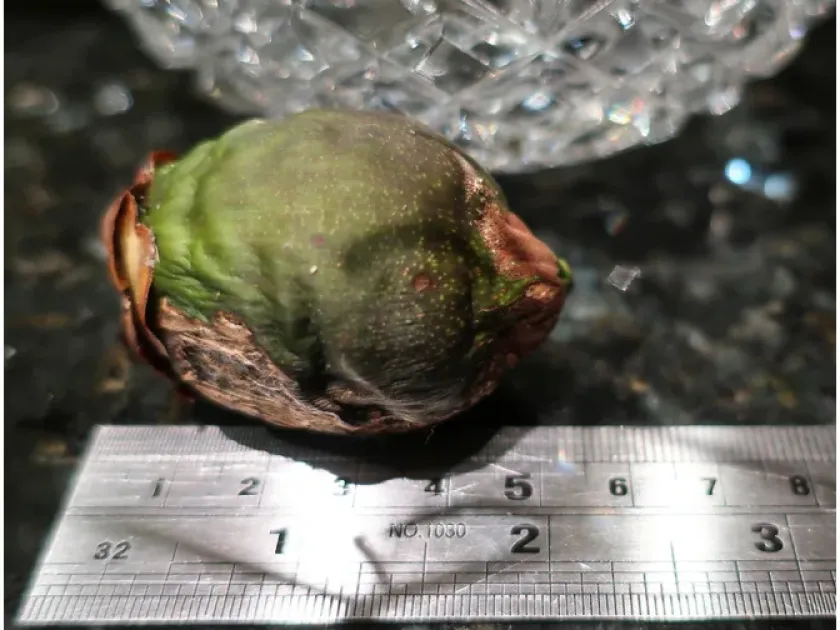
Propagation of Parajubaea cocoides is carried out exclusively through seeds. Fresh seeds have a relatively high germination rate, though the process can be slow and may take anywhere from several months to a year to complete.
Before sowing, it is recommended to soak the seeds in warm water for 2–3 days, changing it regularly. This process softens the tough endocarp of the seed, which is vital for waking the embryo and facilitating germination.
The substrate for sowing should be light, well-drained, and sterile to prevent fungal infections in young sprouts. Maintaining a constant temperature range of +25°C to +30°C is essential for successful seedling emergence.
Once the first leaf emerges, the seedlings become highly sensitive to disturbance, so using deep, individual containers is advisable. A stable environment with no sudden temperature fluctuations is critical during this stage.
Parajubaea cocoides develops slowly in its early years, focusing on building a robust root system. Transplanting into the open ground or a permanent location should only be done after several true leaves have formed.
Growing requirements
Parajubaea cocoides is a palm belonging to the Arecaceae family. Originating from the high-altitude Andean regions of Ecuador and Colombia, it is known for its remarkable ability to tolerate cooler climates compared to other tropical palms.
The species prefers mild summers and can withstand brief light frosts. It does not perform well in environments where high heat is combined with constant, high humidity, as it is adapted to the air of mountain valleys.
The soil for cultivation should be rich in humus, slightly acidic or neutral, and possess excellent drainage properties. Soil waterlogging is the primary cause of failure, leading to rapid root rot in susceptible specimens.
Optimal planting locations provide bright sunlight but protection from strong, desiccating winds. In subtropical environments, the palm adapts well to higher altitudes where the air is cooler and thinner.
Watering should be regular but moderate, allowing the surface of the soil to dry out between sessions. During the active growing season, the plant benefits from balanced fertilizer applications designed specifically for palms.
Yield
Parajubaea cocoides is primarily cultivated for its ornamental value. In its native highland habitat, it develops a thick, imposing trunk that resembles the true coconut palm, which is the origin of its specific epithet.
While the palm produces small, rounded drupes containing edible kernels, these are not grown for commercial agricultural production due to low yields and the long time required for the plant to mature.
The leaves of this palm find niche local applications, including weaving and the construction of traditional roofing materials, thanks to their structural integrity and resistance to weather.
The species holds significant potential for landscape architecture in temperate climates. Its unique hardiness makes it a sought-after subject for parks and gardens looking to incorporate an exotic aesthetic.
Currently, there is no large-scale commercial cultivation of Parajubaea cocoides. Its value remains concentrated in specialized botanical gardens and private collections focused on sustainable, rare plant horticulture.
Main diseases and pests
The most significant threat to Parajubaea cocoides is fungal root rot, typically caused by overwatering or poor drainage. Pathogens such as Fusarium can be devastating if soil conditions are not strictly managed.
Pests such as scale insects and mealybugs can infest the leaf bases and crown, feeding on the plant's sap. Regular inspection of the crown is essential to detect early signs of infestation and prevent spreading.
Spider mites can become a nuisance in greenhouses or indoor environments with low humidity. Controlling them requires monitoring air moisture levels and using appropriate acaricides if necessary.
Chlorosis, often resulting from a lack of trace elements like magnesium or potassium, is a common issue that indicates poor nutrient uptake or incorrect soil pH levels.
- Ensuring optimal drainage to prevent fungal disease.
- Consistent monitoring for scale and mealybugs.
- Applying micronutrient-rich fertilizers to avoid chlorosis.