
Palaquium obovatum
Palaquium obovatum
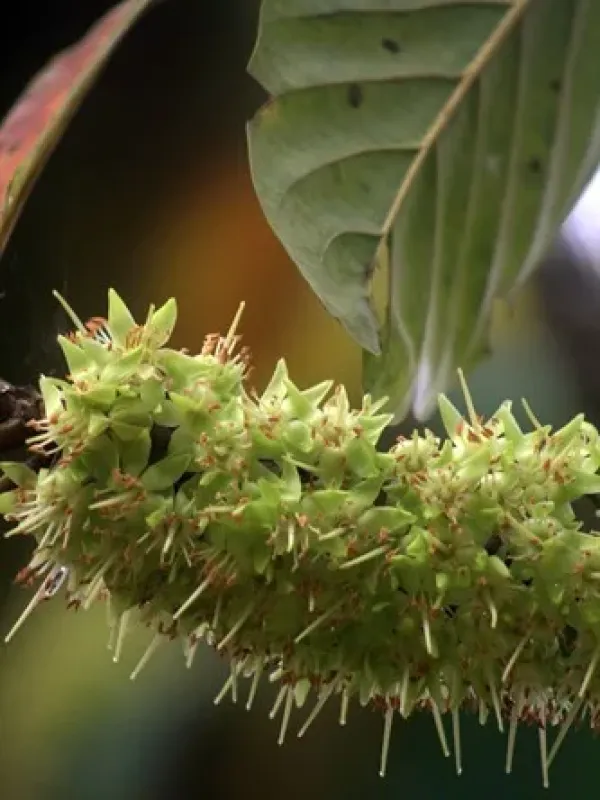
Description
Growing requirements
Palaquium obovatum is a large evergreen tree belonging to the Sapotaceae family. It is native to the tropical rainforests of Southeast Asia, thriving in the warm and humid climates typical of the Malay Archipelago and surrounding regions.
The species requires a high-rainfall environment with stable, warm temperatures throughout the year. It does not tolerate drought or frost, making its cultivation strictly limited to equatorial and tropical zones where moisture remains abundant.
Soil requirements focus on well-draining, nutrient-rich forest soils. While the tree loves moisture, it is highly intolerant of waterlogged ground, which quickly triggers root rot and leads to the decline of individual specimens within a plantation.
Cultivation practices involve providing shade to seedlings, as they are evolved to grow under the canopy. As they mature, their light requirements change, but they generally prefer to maintain the structural integrity of a forest-like environment for optimal health.
The growth rate of the species is relatively slow, which means that any commercial exploitation must be based on long-term planning. It is not a typical short-cycle crop but rather a legacy resource that benefits from sustainable forest management.
Yield
The primary economic value of Palaquium obovatum lies in its production of gutta-percha, a natural latex harvested from the bark. This material is prized for its thermoplastic properties, making it useful in specialized industrial and medical applications.
In addition to latex, the timber of the tree is considered valuable. It is used in construction and the furniture industry due to its moderate density and durability, providing landowners with a supplementary revenue stream beyond raw resin.
Harvesting latex requires specialized techniques to ensure that the tree remains healthy and productive. Over-tapping is a significant risk that can severely stress the plant, hence the need for standardized collection protocols to ensure long-term yield.
The yield of latex typically peaks when the tree reaches maturity, usually after two decades of growth. Proper maintenance and spacing in plantations are essential to ensure that individual trees produce consistent amounts of high-quality sap.
Future agricultural potential rests on the selection of high-yielding varieties that can adapt to managed forestry conditions. By improving propagation techniques, agronomists aim to stabilize the supply of this unique natural polymer for global markets.
Main diseases and pests
The main pathological threats include fungal infections that target the bark and root systems. These infections thrive in the constant humidity of the rainforest, making regular sanitation and proper spacing critical for disease prevention.
Wood-boring insects represent a significant threat to plantation health. These pests compromise the structural integrity of the trunks and often serve as vectors for other pathogens, necessitating continuous monitoring of tree health.
Deforestation remains the most critical threat to the species' long-term survival. As land is cleared for other agricultural purposes, the natural habitat of Palaquium obovatum shrinks, leading to a loss of genetic diversity and local extinction.
Climate change poses a risk by altering precipitation patterns. Since the tree is highly sensitive to the tropical microclimate, even minor shifts in rainfall can significantly impact the metabolism of the tree and its ability to produce latex.
Preventative strategies focus on biodiversity conservation and sustainable land-use management. Protecting the surrounding forest ecosystem helps maintain the natural balance, reducing the need for intensive chemical interventions against pests and diseases.