
Palaquium beccarianum
Palaquium beccarianum
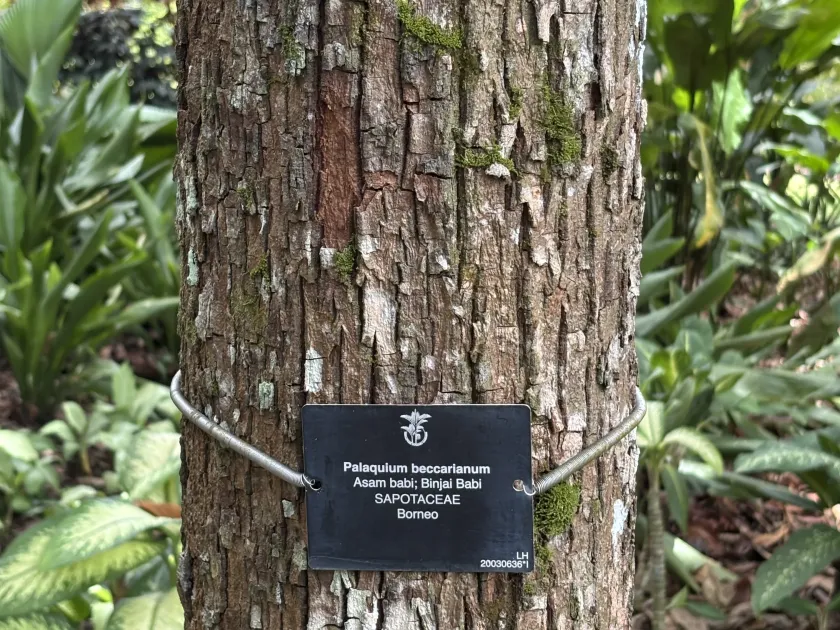
Description
Growing requirements
Palaquium beccarianum is a large evergreen tree species belonging to the Sapotaceae family. Native to the humid tropical forests of Southeast Asia, specifically Indonesia and Malaysia, this tree thrives in stable equatorial environments.
The species requires high annual rainfall and constant warm temperatures to flourish. It is highly sensitive to cold, and its growth is strictly limited to tropical regions where the climate remains frost-free throughout the entire year.
Soil requirements include deep, fertile, and well-drained substrates. While it can adapt to various tropical soil types, it prefers rich loams or alluvial soils that provide sufficient moisture retention without the risk of waterlogging.
Light availability is critical, with young trees often growing in the understory where they receive filtered sunlight. As they mature, they require a larger canopy opening to maintain optimal growth rates and wood density.
Agronomic management involves planting in controlled forest plots. Proper spacing is necessary to minimize competition between trees while ensuring protection from strong, dry winds that could cause excessive transpiration.
Yield
The primary economic value of Palaquium beccarianum lies in its high-quality timber. The wood is renowned for its durability, strength, and resistance to environmental degradation, making it suitable for high-end construction and furniture production.
Like other members of the Palaquium genus, the tree produces latex that contains gutta-percha. This natural thermoplastic polymer has historical and industrial significance, particularly in electrical insulation and medical applications.
The yield of timber is measured over long-term forestry cycles. Producers focus on sustainable harvesting methods, ensuring that the harvest does not deplete the stock but rather allows for cyclical regeneration of the forest stand.
Harvesting techniques require careful management to ensure the longevity of the tree. When extracting latex, traditional tapping methods are employed, which must be executed with precision to prevent permanent damage to the vascular system of the trunk.
Integrated forest management strategies are vital to ensure the long-term viability of the plantations, balancing the demand for natural resources with the need to protect the forest ecosystem biodiversity.