
Ortegocactus macdougallii
Ortegocactus macdougallii
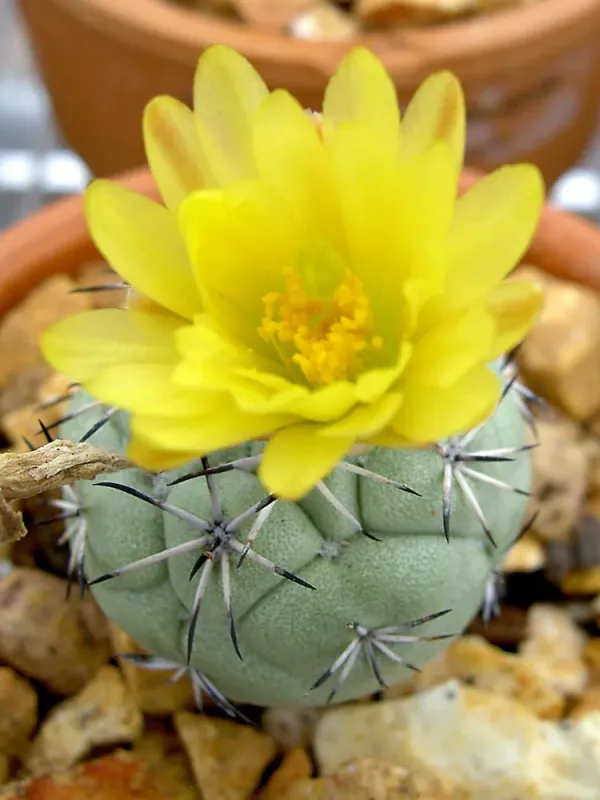
Description
Sowing dates
Propagation of Ortegocactus macdougallii is primarily performed through seeds. The sowing process should ideally take place in the spring, providing the necessary warmth and light for germination.
A sterile, sandy-based substrate with low organic content is required for successful germination. Keeping the humidity high inside a covered propagator is essential until the seeds begin to sprout.
The seedlings grow at a very slow rate, which requires high levels of patience from the grower. Pricking out should be delayed until the plants reach a sufficiently robust size to withstand the stress of moving.
Grafting is a common agricultural practice for this species, used to overcome the slow growth of its own roots. By grafting onto a fast-growing rootstock, one can achieve a mature plant much faster.
Proper aeration after the germination stage is vital to prevent damping-off disease, which is a major threat to young seedlings in enclosed high-humidity environments.
Growing requirements
Ortegocactus macdougallii originates from the limestone rock formations of Oaxaca, Mexico. This specific habitat defines its needs: excellent drainage and mineral-rich, alkaline growing conditions.
The ideal substrate should consist of gravel, crushed limestone, and a small amount of grit to ensure that water never stagnates around the root system. Any organic material added should be strictly limited.
The plant thrives under intense light conditions, reflecting its natural desert habitat. During peak summer, however, moderate shading during the hottest part of the day prevents irreversible tissue damage.
Watering requires strict discipline. It should only be performed during the active growing season when the substrate is completely dry. In winter, the plant enters a dormant phase and needs almost no water.
The temperature range during the active period should be between 20 and 30 degrees Celsius. During the winter rest, keeping it cool (around 10-12 degrees) is necessary to stimulate successful flowering.
Main diseases and pests
Root rot is the most significant threat to Ortegocactus macdougallii. It is almost always a result of excessive watering or a substrate that does not drain quickly enough, leading to fungal colonization.
Mealybugs are the most common pests, often sheltering in the deep grooves between the cactus tubercles. Routine inspections are necessary to catch these pests before they form large, damaging colonies.
Spider mites can also cause distress to the plant, especially in low-humidity environments. These pests feed on the succulent's epidermis, leaving scars that diminish the plant's aesthetic and health.
Bacterial infections can occur suddenly, often manifested by soft, dark spots on the stem. If detected, immediate excision of the infected tissue and application of a dry fungicide are required.
- Use high-quality systemic insecticides specifically formulated for succulents.
- Maintain optimal airflow to prevent the buildup of pathogens on the stem surface.