
Star of Bethlehem
Ornithogalum umbellatum
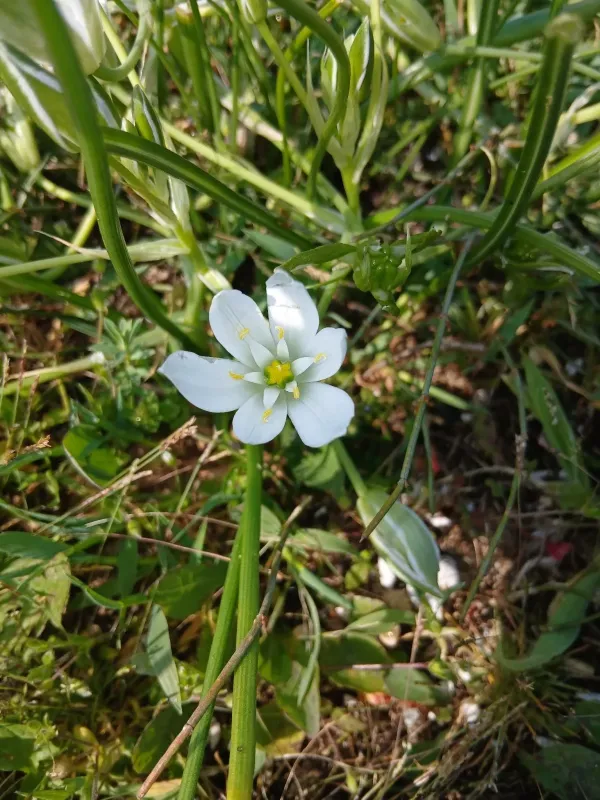
Description
Sowing dates
Planting the bulbs of Ornithogalum umbellatum is most successful when performed in the fall, specifically from September to October, allowing the roots to establish before winter dormancy.
If spring planting is necessary, ensure the soil has thawed and warmed up sufficiently, typically in April, to support the rapid development of the bulbous system.
Bulbs should be placed at a depth of approximately 6 to 10 centimeters, maintaining a spacing of about 15 centimeters to allow for natural vegetative spreading and cluster formation.
The plant reproduces efficiently through offsets, which can be separated from the parent bulb every few years to encourage new growth and maintain the vigor of the colony.
As a member of the Asparagaceae family, this perennial bulb is native to the Mediterranean region but has naturalized across many temperate climates worldwide.
Growing requirements
The Star of Bethlehem thrives in full sun but maintains good growth in partial shade, making it an excellent choice for woodland edges or diverse garden borders.
While adaptable to various soil types, the plant performs best in fertile, well-draining soils that prevent waterlogging, a key requirement for preventing bulb rot.
Moderate moisture is essential during the active spring growth phase; however, once the foliage begins to yellow and die back, the soil should be kept relatively dry.
This species is notably hardy and requires minimal intervention during the winter months, making it a low-maintenance perennial for the modern landscape gardener.
Periodic maintenance includes weeding around the base of the plant to minimize competition for nutrients and ensuring that the site has adequate air circulation.
Main diseases and pests
Fungal diseases are the primary threat to this crop, particularly in poorly drained environments where moisture accumulates around the root zone, leading to crown or bulb rot.
Pests such as bulb mites can infest the storage organs, weakening the plant and potentially leading to a total failure of the bulb cluster over several seasons.
To mitigate the risk of infection, it is recommended to treat bulbs with a fungicidal dip prior to planting and to rotate the location of the planting beds periodically.
Sanitation practices, including the removal of dead or rotting plant tissue immediately upon discovery, are crucial for keeping the garden free of pathogens.
Regular inspection of the foliage for discoloration or signs of infestation allows for early detection and intervention with appropriate horticultural products.