
Reverchon's Star-of-Bethlehem
Ornithogalum reverchonii
Description
Growing requirements
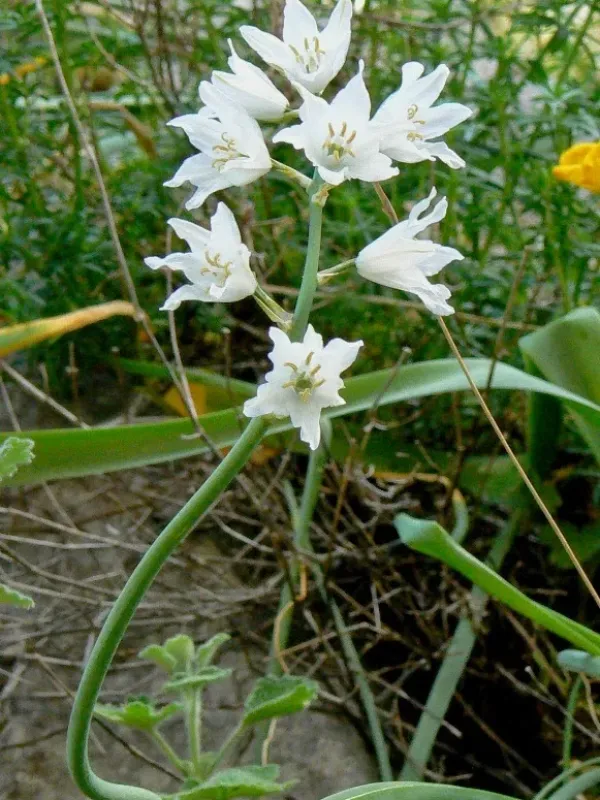
Reverchon's Star-of-Bethlehem (Ornithogalum reverchonii) is a bulbous herbaceous perennial belonging to the Asparagaceae family. It is a rare species native to mountainous regions in Spain and Morocco, known for its resilience.
The plant features distinct basal leaves and an elegant inflorescence. Botanically, it is adapted to rocky environments, utilizing its bulb to store nutrients through periods of drought and high summer heat.
In terms of cultivation, the plant requires exceptional soil drainage. It thrives in gritty or sandy substrates where water can pass through freely, as moisture retention around the bulb is detrimental and often fatal.
Sunlight exposure is essential for this species. It demands full sun to partial shade in specific climates, but it performs best when given at least six to eight hours of direct sunlight daily to produce vigorous blooms.
Temperature tolerance varies, with the plant being hardy only in mild temperate zones. Gardeners in cooler regions should treat it as a seasonal bulb or provide heavy winter protection with straw or mulch to prevent frost damage.
Main diseases and pests
Fungal pathogens, particularly those causing Fusarium basal rot, are the most significant threat to this crop. These pathogens thrive in poorly aerated or waterlogged soils, directly infecting the bulbs.
Common pests include bulb flies, which deposit eggs that hatch into larvae consuming the bulb interior. Vigilant monitoring and the use of physical netting or systemic insecticides can manage these infestations.
Leaf spot diseases may occur under conditions of high humidity and stagnant air. Proper spacing between individual plants is necessary to promote airflow and reduce the humidity levels around the foliage.
Slugs and snails can severely damage young leaves and floral buds. Integrated pest management, including the use of barriers or copper-based deterrents, is recommended for effective protection.
The overall health of the plant depends on the sanitary quality of the bulbs. Any soft or discolored bulb should be discarded before planting to avoid the introduction of latent diseases into the soil profile.