
Star of Bethlehem
Ornithogalum orthophyllum
Description
Sowing dates
Bulbs are typically planted during late summer or autumn when the plant enters dormancy. A planting depth of approximately 8–10 cm is recommended, depending on the bulb size, to ensure adequate protection from temperature fluctuations.
Spacing should be managed to ensure proper air circulation, with 10–15 cm between individual bulbs. Overcrowding can lead to increased humidity around the foliage, which invites fungal issues during humid spring weather.
Propagation via seeds is a slower process, often requiring several years to reach the mature, flowering stage. When using seeds, they should be sown in the autumn to undergo winter stratification in the soil.
Adding coarse sand at the bottom of the planting hole helps improve drainage directly around the bulb. This simple agricultural practice significantly reduces the risk of root pathogens throughout the dormant season.
Maintenance during the growing season includes keeping the area free of competing weeds, which can shade the plant and consume vital nutrients stored in the soil layers near the bulbs.
Growing requirements
Ornithogalum orthophyllum, commonly known as a type of Star of Bethlehem, belongs to the Asparagaceae family. It is a bulbous perennial that is native to steppe regions and rocky mountain slopes, well-adapted to environments with distinct seasonal changes.
The plant thrives in full sun but can tolerate partial shade, provided it receives sufficient light to sustain its photosynthetic activity during the early spring period. It is an excellent choice for rock gardens and naturalistic planting schemes.
Soil requirements focus on high permeability; the substrate must be well-drained and neutral to slightly alkaline. Sandy or loamy soils are ideal for preventing bulb rot, which is the primary cause of plant loss in cultivated conditions.
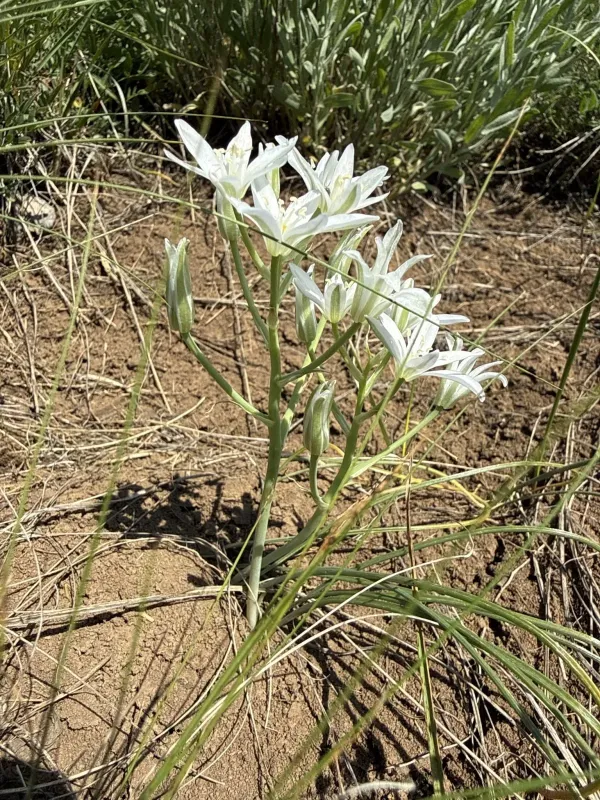
Botanically, the species is recognized by its narrow, upright leaves featuring a prominent white midrib. The inflorescence consists of star-shaped white flowers that remain closed during overcast conditions, acting as a natural light sensor.
In landscape design, this species is valued for its hardiness and early flowering period. It serves as a vital resource for early-season pollinators, bridging the gap before many other perennial species begin their active blooming phase.
Main diseases and pests
The most significant threats to Ornithogalum orthophyllum include fungal pathogens such as Fusarium and Sclerotinia, which target the bulb's root system. These diseases are exacerbated by soil compaction and poor water management.
Pests like bulb mites and thrips are common adversaries. These insects feed on the plant tissues, leading to stunted growth and providing entry points for secondary bacterial infections that can devastate a planting site.
Leaf spot diseases, caused by moisture-related fungi, can reduce the plant's capacity to store energy for the following season. Regular monitoring of leaf health is necessary to ensure the bulb remains vital for next year's bloom.
Chemical control measures should be applied preventatively, especially in regions with high spring rainfall. Using systemic fungicides can help protect the plant during its most vulnerable stage of rapid emergence.
- Avoid heavy clay soils.
- Monitor for aphid infestations.
- Remove diseased foliage immediately.