
Ornithogalum gussonei
Ornithogalum gussonei
Description
Growing requirements
Ornithogalum gussonei is a perennial bulbous plant belonging to the family Asparagaceae. As an ephemeral species, it completes its primary growth cycle in early spring, capitalizing on moisture availability before the dormant summer season begins.
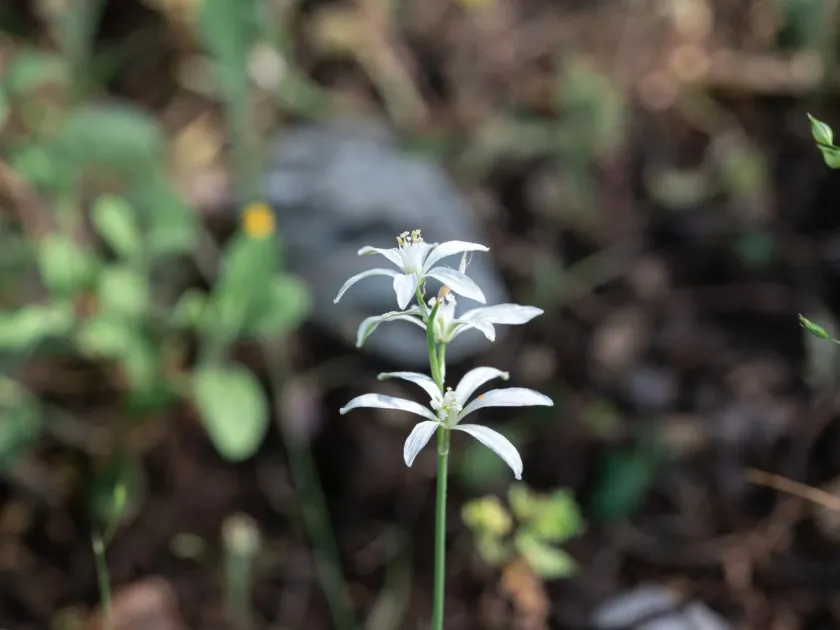
The plant is characterized by its narrow, linear leaves marked with a distinct white central stripe. The inflorescence consists of star-shaped white flowers, which feature a prominent greenish band on the back of each petal, serving as a key diagnostic trait for this species.
Its natural habitat spans Mediterranean regions, the Caucasus, and parts of Southeastern Europe. It thrives in open, sunny locations such as steppes, rocky slopes, and scrublands, demonstrating significant resilience to varied environmental conditions.
Successful cultivation requires well-drained, fertile soil with a neutral or slightly alkaline pH. Drainage is the most critical factor for this species; waterlogging, especially during the dormancy period, can cause the bulbs to rot, leading to plant loss.
Agronomically, the plant is valued for its hardiness and low-maintenance profile. It is widely used in landscape design, specifically in rock gardens and herbaceous borders, providing an early splash of color during the transition from winter to spring.
Main diseases and pests
The most significant threat to Ornithogalum gussonei is fungal infection, particularly bulb rot caused by excessive soil moisture. Poorly drained environments encourage pathogens that quickly compromise the integrity of the bulb and root system.
Grey mold (Botrytis) may affect the plants during periods of high humidity and moderate temperatures in the spring. To manage this, growers should ensure adequate spacing between plants to promote airflow and prevent moisture accumulation on the foliage.
Pests such as onion flies and bulb mites pose a serious risk to the health of the plant. These pests feed on the bulb tissue, which can result in stunted growth or sudden death; proactive monitoring and using clean, disease-free bulbs for propagation are essential.
Rodents, such as voles, can be highly destructive in gardens, frequently consuming bulbs during the winter months. Protecting planting sites with wire mesh or specialized baskets is a recommended strategy to minimize losses in areas with high rodent activity.
Maintaining a balanced environment through regular weeding and proper soil management is crucial for the long-term success of the crop. A healthy growing environment naturally boosts the plant's resistance to minor infections and helps prevent major pest outbreaks.