
Oreocnide integrifolia
Oreocnide integrifolia
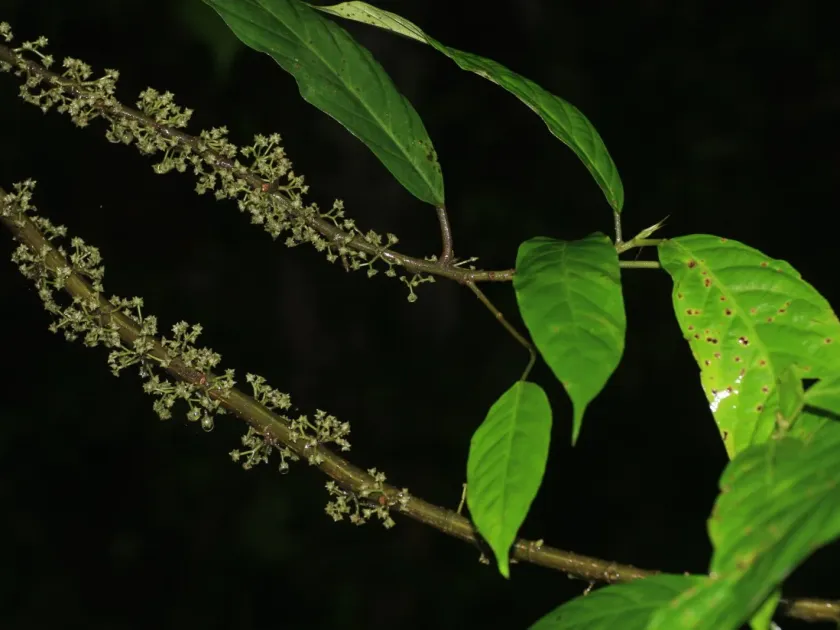
Description
Growing requirements
Oreocnide integrifolia is a perennial shrub or small tree belonging to the Urticaceae (nettle) family. Native to the humid mountain forests of Asia, ranging from the Himalayas to Southeast Asia, it thrives in environments characterized by high humidity and consistent rainfall.
The plant requires deep, well-drained, and nutrient-rich soils to reach its full potential. In an agricultural setting, it performs best in shaded or semi-shaded areas, as direct tropical sunlight can scorch the leaves and impede the growth rate of the fibrous stems.
Climate requirements strictly involve tropical or subtropical conditions without frost. The plant is extremely sensitive to thermal shock and requires a stable, warm climate throughout the year to maintain its metabolism for fiber synthesis.
Botanically, it is recognized by its entire leaves and stems rich in high-quality bast fibers. The vascular structure of the stem is particularly developed to support vertical growth in forest environments, which makes it an excellent candidate for fiber harvesting.
Good agricultural practice for this crop involves meticulous soil management, including the addition of compost or organic mulch to simulate the forest floor environment, ensuring the root zone stays cool and moist during the growing season.
Harvesting
Harvesting Oreocnide integrifolia focuses on the stems, which contain the valuable bast fibers. Harvesting occurs when the plants have reached sufficient height and stem maturity but before they begin to produce flowers, as nutrient allocation shifts during the reproductive phase.
The stems are harvested manually, followed by the extraction of the bark. Traditional retting (soaking in water) is used to separate the fibrous layer from the woody inner core, allowing for the extraction of strong, flexible fibers suitable for industrial applications.
The fibers are highly valued for their exceptional tensile strength and resistance to moisture, making them ideal for traditional cordage, high-durability fishing gear, and woven handicrafts that must withstand harsh environmental conditions.
Beyond fiber, local communities have long utilized the plant for various traditional purposes, reflecting the biodiversity potential of this species. Its natural fibers are fully biodegradable, aligning with modern industrial trends toward sustainable material sourcing.
Future development for this crop relies on optimizing planting density and refining the extraction process to maximize yield while maintaining the unique mechanical properties of the fiber that are sought after in niche textile markets.