
Omphalea diandra
Omphalea diandra
Description
Growing requirements
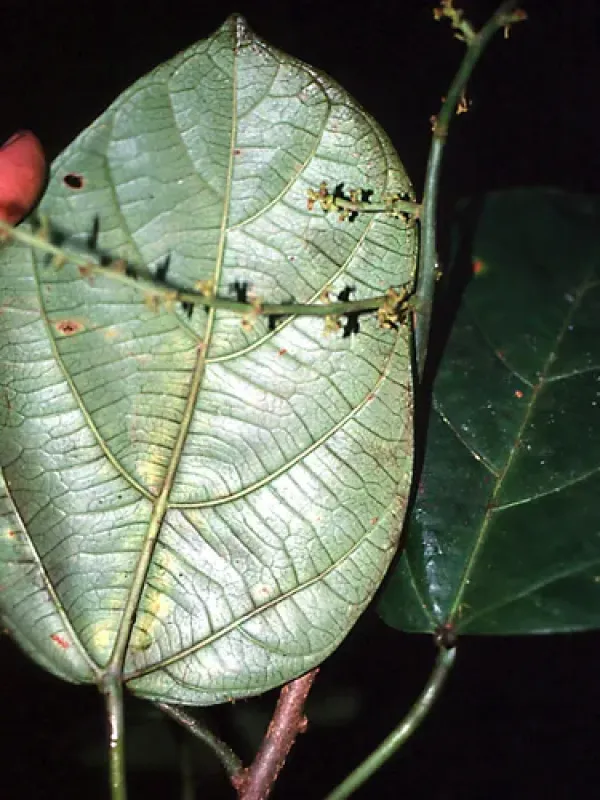
Omphalea diandra is a woody vine belonging to the Euphorbiaceae family, native to the tropical regions of Central and South America. It is typically found in humid forests where it utilizes other trees for structural support as it climbs toward the canopy.
To cultivate this species, a climate with consistent high temperatures and high humidity is essential. The plant thrives in equatorial zones and cannot tolerate frost, which dictates its limited geographical range for agricultural production.
Regarding soil requirements, the plant prefers well-drained, nutrient-rich substrates. It is particularly sensitive to waterlogging, so soil aeration is a critical factor in preventing root decay and ensuring optimal nutrient uptake for healthy vegetative growth.
Agricultural management involves careful pruning and the use of trellis systems. Since it is a climbing plant, proper training of the vines is necessary to facilitate harvesting and to ensure that the plant receives adequate sunlight exposure.
The economic importance of Omphalea diandra primarily lies in its seeds, which are highly valued for their oil content. Historically, this oil has been utilized both as a food source and for various artisanal and technical applications in its native range.
Main diseases and pests
The plant is susceptible to attacks from local tropical defoliators and specific moth larvae that thrive on Euphorbiaceae species. In intensive cultivation, fungal pathogens may also pose a risk if the canopy becomes too dense and airflow is restricted.