
Oleandra pistillaris
Oleandra pistillaris
Description
Growing requirements
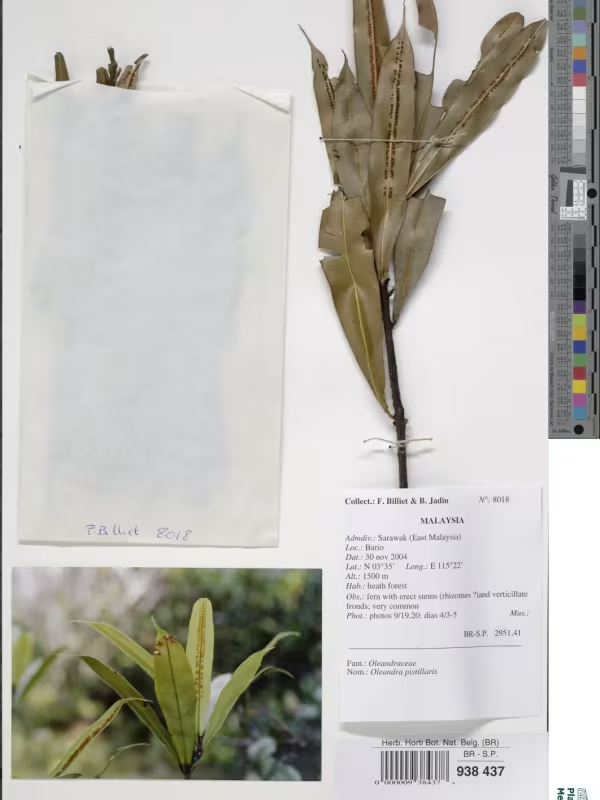
Oleandra pistillaris is a tropical fern belonging to the Oleandraceae family. The plant features a long creeping rhizome covered in scales, from which upright or climbing shoots emerge, bearing lanceolate leathery fronds.
In its natural habitat, this species grows in the humid tropical forests of Southeast Asia and Oceania. For successful development, the crop requires consistently high air temperatures, ranging from +22 to +28 degrees Celsius, with no sudden fluctuations.
The most important requirement for cultivation is high air humidity, which must be maintained at 70–85 percent. In greenhouse conditions, misting systems or regular spraying are used to prevent the leaf blades from drying out.
The soil substrate for the crop must provide excellent aeration and high water-holding capacity. An optimal choice is a mixture of peat, leaf mold, shredded coniferous bark, and perlite to improve drainage properties.
The plant prefers diffused light, as direct sunlight can cause burns on the delicate tissues of young fronds. In professional cultivation, shading nets are often used to ensure a comfortable light regime for efficient photosynthesis.
Main diseases and pests
Among the primary phytopathologies is root rot, caused by water stagnation in the root zone. Prevention relies on ensuring a high-quality drainage layer and strictly adhering to a watering schedule that avoids waterlogging the substrate.
Pests pose a significant threat, particularly scale insects and mealybugs, which attach themselves to the underside of the fronds. Regular visual inspections of the plants allow for early detection of infestations and immediate isolation of affected areas.
Spider mites frequently attack the crop in environments with low air humidity, leading to discoloration and deformation of the leaves. Combatting this pest involves increasing humidity levels and applying acaricides at the first signs of damage.
Anthracnose and various leaf spots can occur when ventilation is inadequate. It is crucial to maintain air circulation within the greenhouse to reduce the concentration of pathogenic fungal spores on the surface of vegetative organs.
Integrated pest management includes the use of systemic fungicides and insecticides as a preventive measure, following standard protocols for the treatment of decorative crops in closed-ground environments.