
Oldenburgia paradoxa
Oldenburgia paradoxa
Description
Growing requirements
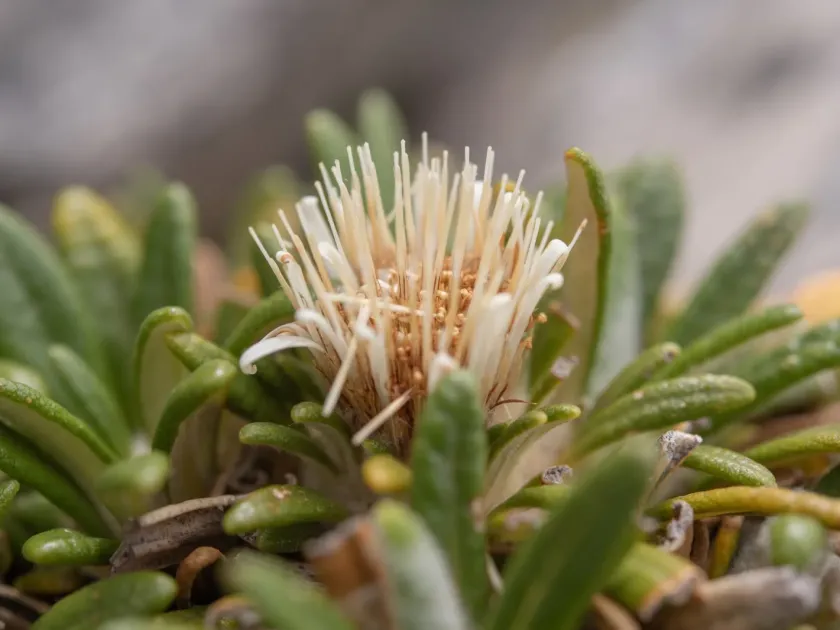
Oldenburgia paradoxa is a distinct species of shrub belonging to the Asteraceae family. It is endemic to the mountainous regions of the Cape Peninsula in South Africa, where it thrives in rocky, nutrient-poor sandstone soils.
The plant is perfectly adapted to a Mediterranean-type climate characterized by winter rainfall and hot, dry summers. It requires excellent soil drainage, as any water stagnation can prove fatal to its specialized root system.
Botanically, it is recognized by its robust stems topped with clusters of large, leathery leaves. A key adaptation of this plant is the dense, silver-white felt-like indumentum that covers its foliage, protecting the plant from desiccation and high winds.
Due to its incredibly slow growth rate, this species is not suited for mass commercial agriculture. It remains a botanical curiosity primarily kept in specialized nurseries and conservatory collections that mimic its natural mountain habitat.
The plant has no industrial or food-related application. Its primary value lies in its unique evolutionary history and its aesthetic presence as a highly specialized species within the diverse South African fynbos vegetation.
Main diseases and pests
In the wild, the primary threats include habitat loss and the encroachment of invasive plant species. Because the species has a very limited geographical range, it is highly sensitive to environmental disturbances.
In cultivation, the most significant risk to the plant is fungal root rot. This condition is triggered by excessive moisture and poor soil aeration, which prevents the roots from accessing necessary oxygen.
Pests such as spider mites and mealybugs can infest the plant, hiding within the dense leaf hairs. Controlling these pests is difficult because the hair layer acts as a barrier, limiting the effectiveness of topical insecticidal sprays.
Effective management requires maintaining dry conditions and ensuring optimal airflow around the plant at all times. Excessive ambient humidity should be avoided to prevent secondary bacterial or fungal infections.
Successful propagation is notoriously difficult, as the seeds exhibit poor germination rates. Professional propagation techniques are often required to ensure the survival of young seedlings in the early stages of development.