
Beach evening primrose
Oenothera humifusa
Description
Growing requirements
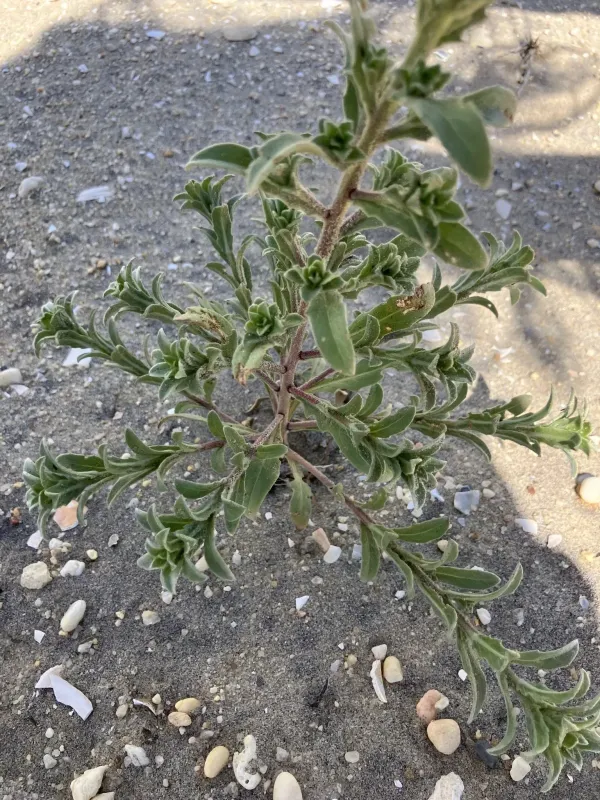
Beach evening primrose (Oenothera humifusa) is a herbaceous perennial plant belonging to the Onagraceae family. In agricultural practice, it is recognized for its unique ability to thrive in harsh, sandy environments where other crops often fail to establish.
Native to coastal areas of North America, this plant is naturally adapted to high light intensity, salt spray, and porous sandy soils. These evolutionary traits make it a candidate for cultivating on marginalized, degraded coastal lands.
The crop requires exceptionally well-drained, sandy soils. It is highly intolerant of waterlogged conditions, which promote root rot and significantly depress yield. Adequate soil aeration is the most critical factor for successfully growing this species.
Beach evening primrose is a sun-loving crop. It requires full exposure to sunlight throughout the growing season to maximize its vegetative development and seed production. Shaded conditions lead to weak stems and poor flowering.
Regarding climate, the plant exhibits excellent drought tolerance due to its deep taproot system. It can survive extended periods of low rainfall, making it suitable for regions with limited irrigation resources, provided the soil structure is favorable.
Yield
The primary economic focus of cultivating Oenothera humifusa is the production of seeds, which are rich in gamma-linolenic acid. The final yield is highly dependent on managing the planting density and ensuring the plants do not compete with weeds during their establishment phase.
Under optimal management conditions, commercial yields range from 500 to 1,200 kilograms of seed per hectare. Successful production requires precise control over planting depth and soil moisture during the initial germination stage.
Fertilization management should be conservative. Since the plant is adapted to nutrient-poor sands, excessive nitrogen can lead to excessive vegetative growth at the expense of seed production. Balanced mineral fertilization is recommended.
Yield stability is maintained by implementing an integrated weed management strategy. In the first year, the crop's slow growth makes it vulnerable to competition, so mechanical weeding or specific herbicidal treatments are essential.
Enhancing yield often involves the use of plant growth regulators during the flowering stage to maximize fruit set. This helps in uniform ripening of the seed capsules, which is crucial for efficient harvesting operations.
Main diseases and pests
The most significant threats to Oenothera humifusa include fungal pathogens such as Fusarium wilt and various leaf spots, especially if humidity levels remain high around the leaf canopy. Good airflow is essential to minimize these risks.
Soil-borne pests like wireworms can cause substantial damage to the root system, leading to plant mortality. Monitoring the field before planting and applying targeted soil insecticides can help mitigate these infestations.
Disease management relies heavily on preventative practices. Seed treatment with fungicides before sowing is a standard industry practice to ensure a healthy stand. Avoid rotating with other members of the Onagraceae family to break pathogen cycles.
Insects like aphids and various caterpillar species may cause damage by feeding on the leaves and developing capsules. Regular scouting allows for the application of selective insecticides before pest populations reach damaging thresholds.
Crop protection programs should prioritize biological or systemic agents that minimize residue impact on the oil quality of the seeds. Environmental factors like high humidity must be monitored as they correlate with the incidence of fungal attacks.
Harvesting
Harvesting beach evening primrose is a sensitive process because the seed capsules dehisce easily upon reaching full maturity. The goal is to capture the seeds at the peak of their nutritional quality before natural shedding occurs.
A two-stage harvesting process is recommended. Plants are mowed when the capsules turn brown but are not yet fully dry. This allows the seeds to finish ripening in the windrows, ensuring maximum quality and uniformity.
After windrow drying, combine harvesters are used for threshing. The equipment must be adjusted to use low cylinder speeds to prevent mechanical damage to the seeds, which can compromise their oil composition and market value.
Post-harvest processing involves cleaning the seeds using air-screen cleaners to remove chaff and fine debris. Moisture content should be checked immediately, and seeds must be dried to 10-12% moisture for safe storage.
- Mowing during the brown capsule stage.
- Using a two-stage harvest (windrowing) to prevent losses.
- Adjusting harvester settings for gentle threshing.
- Removing debris through precision air-screen cleaning.
- Storing in cool, well-ventilated areas to prevent spoilage.