
Hartweg's evening primrose
Oenothera hartwegii
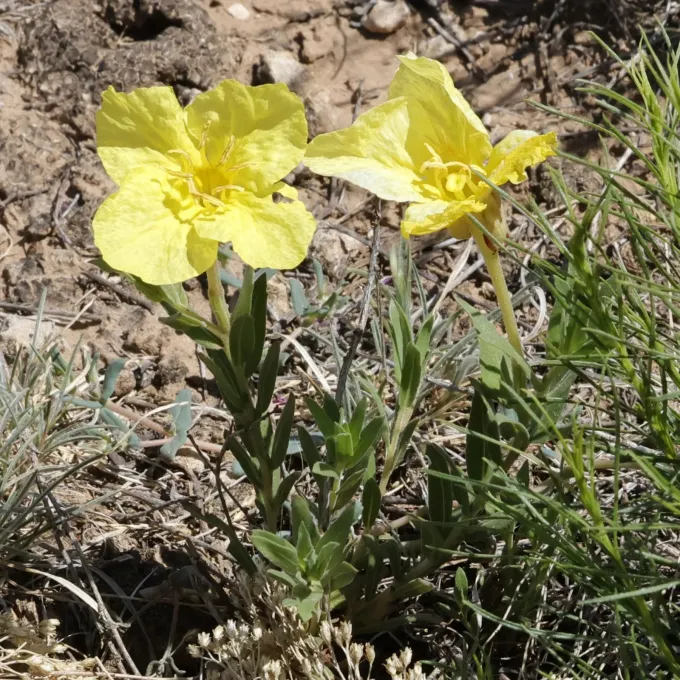
Description
Sowing dates
Seeds of Oenothera hartwegii should be sown directly in the ground during the spring season once the frost danger has passed and the soil warms up.
For early bloom development, starting seeds indoors in late winter is a standard practice, using light, well-draining seed-starting soil.
Because the seeds are very tiny, they require surface sowing and should be covered only lightly with a thin layer of soil or vermiculite.
Optimal germination occurs at temperatures between 18 and 22 degrees Celsius, with seedlings appearing within two to three weeks under proper conditions.
After thinning the seedlings, it is important to provide sufficient space for airflow to ensure the long-term health and vigor of the plants.
Growing requirements
Oenothera hartwegii, belonging to the Onagraceae family, is a drought-tolerant perennial that thrives in full sun exposure and well-lit environments.
The plant is highly specialized for arid conditions, favoring sandy or rocky soils with excellent drainage to prevent root zone saturation.
This species shows high adaptability to poor, infertile soils, making it an excellent candidate for xeriscaping or rock garden landscaping projects.
It maintains a deep taproot, which allows the plant to access moisture in dry periods, reducing the need for supplemental irrigation once established.
While tolerant of low fertility, an occasional balanced mineral fertilizer application can help maintain the plant's structural integrity during the flowering stage.
Main diseases and pests
Root rot is the most significant disease affecting the health of Hartweg's evening primrose, particularly in locations with poor soil drainage.
Powdery mildew can occur if the plants are placed in areas with high humidity or stagnant air circulation, causing white spots on foliage.
Aphids are the most common insect pest, frequently clustering on flower buds and causing stunted growth if left unmanaged.
Spider mites can be a persistent problem during extended periods of heat and drought, leading to leaf yellowing and reduced photosynthetic capacity.
Proactive monitoring is essential to detect pest activity early, allowing for timely intervention with mechanical or chemical control measures.