
Brazilian Sassafras
Ocotea odorifera
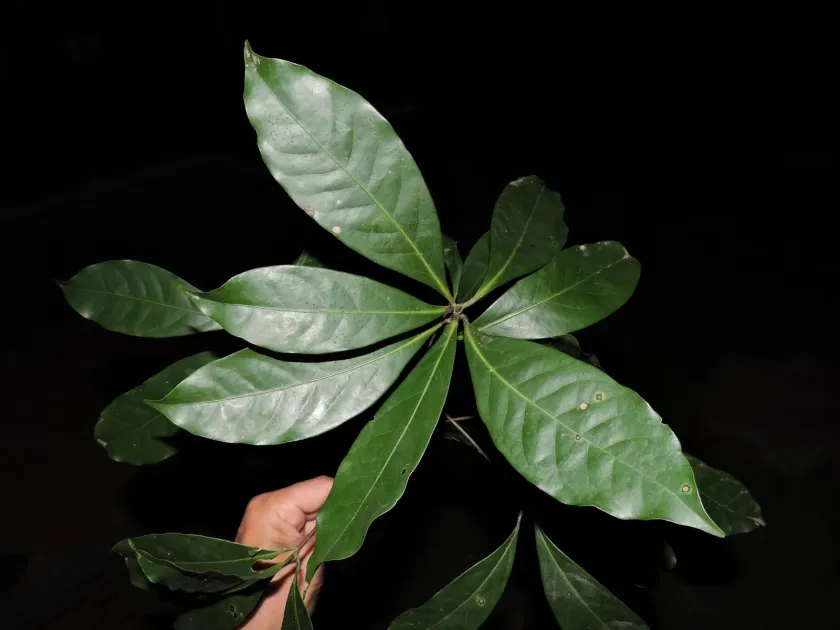
Description
Growing requirements
Brazilian Sassafras, known botanically as Ocotea odorifera, is a prominent member of the Lauraceae family. This evergreen tree is native to the Atlantic Forest regions of South America, specifically Brazil, and is highly valued for its aromatic wood.
The tree thrives in a humid tropical climate characterized by high annual rainfall and consistent temperatures. It does not tolerate frost, which makes its successful cultivation restricted to warm, stable environments where cold stress is absent.
Regarding soil requirements, the species prefers deep, well-draining, fertile soils that are slightly acidic. Waterlogged conditions must be strictly avoided, as the root system is highly sensitive to hypoxia, which can rapidly lead to fungal decline.
In its juvenile stage, Ocotea odorifera requires partial shade to replicate the forest floor environment of its origin. As the tree matures, it transitions to needing increased light exposure to maximize its growth potential and the synthesis of aromatic oils.
Agrotechnical management requires careful spacing and protection from invasive species that might compete for nutrients. Given the tree's slow growth, it is typically managed within long-term agroforestry systems rather than short-rotation crop cycles.
Main diseases and pests
The most common biological threats include root rot pathogens, specifically those triggered by saturated soil conditions. Proper site selection and drainage management are the most effective preventative measures for farmers.
Insect pests such as wood-boring beetles can significantly impact tree health by creating entry points for pathogens and structurally damaging the stems. Integrated pest management protocols are recommended to mitigate these issues.
Deforestation and land-use changes represent the most significant external threats to the species. Protecting the natural habitat is essential to preserve the biological diversity required for potential cross-breeding and improvement.
Nutrient deficiency, particularly in the later stages of growth, can reduce oil yield and overall tree vigor. Regular soil testing and the application of organic amendments are beneficial for sustaining high-quality growth.
Climate instability, including uncharacteristic dry spells, can hinder the development of the canopy. Farmers often implement irrigation systems to stabilize the water regime during the critical growth phases of the trees.
Harvesting
The primary commercial product is the essential oil, rich in safrole, which is extracted via steam distillation from the wood and bark. Precision in processing is essential to capture the volatile compounds efficiently.
Harvesting strategies are based on the selective extraction of mature trees to ensure sustainable management of the plantations. Younger trees are left to mature, maintaining the structural integrity of the forestry site.
In addition to the oil, the timber itself has been used in specialty furniture manufacturing, though the pungent, distinct odor limits its application to specific niches. The timber is generally durable but requires seasoned drying.
Logistical efficiency is key; once harvested, wood should be processed promptly to minimize the evaporation of active essential oil components. Establishing small-scale distillers near the production site is often a preferred model.
Strict adherence to environmental regulations is necessary, as the wild population of Ocotea odorifera is protected in many regions. Cultivated sources are therefore becoming the preferred supply chain to reduce pressure on native forests.